Small air-sealing projects
Air Sealing Windows, Doors, and Small Gaps: Where Foam Fits
The joint behind window trim, a worn door weatherstrip, a drainage opening, and a pipe penetration need different treatments. Suitable foam can seal some fixed gaps, but its use must match the opening, window or door instructions, substrate, exposure controls, and any required fire protection.
On this page
The short answer
Find the actual air path before filling it. Keep moving parts, weep holes, drainage routes, ventilation openings, and required clearances functional. Use a documented window-and-door sealant only where the installed unit permits it, and obtain qualified help for concealed damage, old painted trim, heat sources, and rated construction.
This answer changes when…
- The opening is a fixed construction joint, moving joint, drainage path, or required vent
- The window or door manufacturer permits the proposed sealant and detail
- Trim removal can expose old paint, wet wood, wiring, or concealed damage
- The gap is near a heat source or in a fire-protected assembly
- The work can follow the exact label, safety documents, and occupant restrictions
Dotted terms have plain-language definitions. Browse the glossary ↗
Which gaps can you seal with foam?
Foam may suit an accessible, fixed gap when its label and the surrounding assembly allow that use. It is not the default treatment for every opening around a window, door, or pipe. First identify what the opening does and where air is entering.
A draft beside a window can come from the frame-to-wall joint, worn weatherstripping, an open sash, or another connected wall cavity. A cold surface can also feel uncomfortable without an air leak at that location. Adding material to the first visible crack may leave the original problem unresolved.
For a small project, begin with an opening list and photographs. For widespread drafts or an uncertain air path, an energy assessor can investigate the house and prioritize work. The DOE Building America air-sealing checklist places air sealing within a broader assessment of existing conditions and building safety.
Separate the window’s three different connections
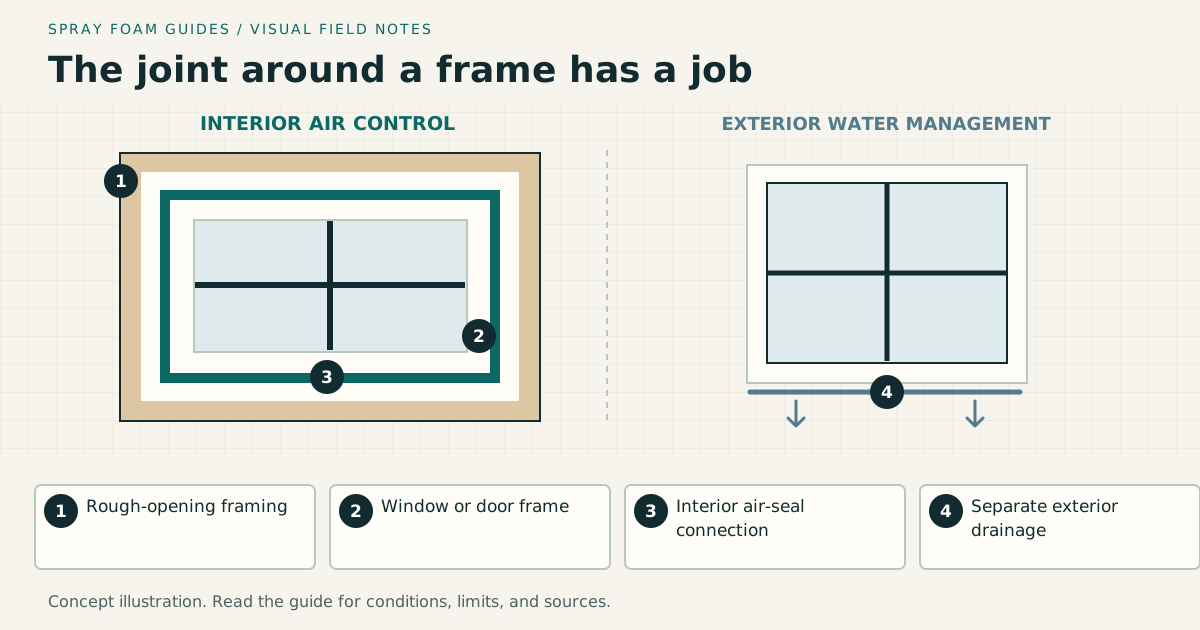
The rough-opening joint lies between the installed frame and the surrounding wall framing. It may be concealed by interior trim. This is the location commonly addressed by a compatible sealant, backer-rod detail, or specifically permitted window-and-door foam.
The operating joint is where the sash or door moves against the frame. It needs its intended weatherstripping, seals, hardware adjustment, and clearance. Expanding foam in that joint can prevent operation. A window required for emergency escape must remain usable.
The exterior water-management connection includes flashing, drainage provisions, and the unit’s designed water exits. An interior air seal cannot repair defective flashing, and filling a weep hole can interfere with drainage. Keep these three connections separate in the scope even when they are physically close together.
| Observation | Appropriate first question |
|---|---|
| Draft at the edge of interior trim | Is the frame-to-wall air seal missing or disconnected? |
| Air felt where a sash closes | Are weatherstripping, alignment, or hardware responsible? |
| Water after wind-driven rain | What part of the window or flashing system admits or drains water? |
| Door rubs or will not latch | Is there frame movement, hinge wear, or another operating defect? |
| Visible exterior slot or hole | Is this a designed drainage or ventilation opening? |
Window-and-door foam needs two sets of instructions
Check both the sealant documentation and the installed window or door instructions. They should agree on permitted material, application location, joint conditions, and any limitations. A product marketed as low expansion still needs to be appropriate for that specific unit and use.
Building America’s rough-opening guide cautions that ordinary expanding foam can distort jambs and interfere with operation. It also distinguishes interior air sealing from the drainage space farther toward the exterior. Those principles do not authorize a universal fill depth or bead size.
If the unit’s identity is unknown, look for labels or installation records and ask its manufacturer or a qualified window professional. Do not assume that a generic gap filler is equivalent to a window-specific material. Foam should not be relied on to replace required shims, anchors, or structural fastening.
The document-reading guide explains where to find handling restrictions, application limits, and the evidence behind performance claims. Follow the exact instructions rather than a technique copied from another can or video.
Consider caulk, backing, and weatherstripping too
A suitable sealant joint may be easier to inspect and maintain than a deep foam fill. Backing can help form the joint required by the sealant system. Compatibility, movement, adhesion, and geometry still matter; a thin smear across a wide irregular opening is not a complete joint design.
Weatherstripping serves moving connections. Matching the intended profile and keeping the hardware functional may address an operating-joint draft without disturbing the wall. A damaged threshold or out-of-square door may require repair before new seals can perform as intended.
ENERGY STAR’s window-trim guide identifies sealing behind trim as a distinct improvement. It also recognizes that complicated trim and older paint can change the suitability of homeowner work. The least disruptive repair follows the actual leak location, not a preference for one material.
Hidden conditions can turn a small task into a larger repair
Stop if opening the trim reveals wet wood, decay, insect damage, unexplained staining, or uncertain electrical conditions. Photograph what can be observed safely and arrange an assessment before covering it. Replacing trim over a fresh bead does not establish that an old window leak is resolved.
For homes built before 1978, evaluate lead-paint concerns before disturbing painted surfaces. EPA’s guidance for DIY renovations explains why ordinary renovation activities can create lead dust. This guide does not provide a trim-removal or paint-disturbance procedure.
Also identify old sash weights, pulley systems, replacement-window pockets, and other concealed components. Filling an unknown space can obstruct a mechanism or make future repairs difficult. Ask what lies beyond the visible gap and what must remain accessible.
Small service penetrations need their own detail
A pipe opening through an ordinary exterior wall is a different problem from a penetration through a rated wall, a garage separation, or a floor with required protection. The relevant assembly determines the acceptable treatment. Package color and the word “fireblock” do not establish a rated firestop system.
Keep foam out of electrical boxes, serviceable connections, equipment openings, and required heat clearances unless a specifically applicable approved detail permits the work. Do not improvise around chimneys, flues, recessed fixtures, or unfamiliar vents. See thermal barriers and firestop distinctions before treating those openings as ordinary drafts.
Exterior joints also need weather exposure, movement, and finish compatibility considered. A protected interior sealant use should not be extended outdoors without the applicable documentation.
Plan the job by openings, not can count
Suppose a room has three windows, a sticking exterior door, and two pipe penetrations. Listing six “gaps to foam” hides the real decisions. Instead, give each opening an identifier, describe its function and observed problem, note the substrate, and identify the governing detail.
One window may need an accessible rough-opening seal, another a weatherstrip repair, and the third a leak investigation. The door may need adjustment. One pipe opening may require a different approved treatment from the other. This is a hypothetical sorting exercise, not a recommendation to treat every opening.
Keep any quantity estimate tied to the product’s actual units. Linear coverage assumes a particular joint geometry; square-foot surface coverage and board-foot insulation volume answer different questions. Do not use the board-foot calculator to turn unspecified narrow joints into a package order.
Check operation and the completed detail
Record window and door operation before the work. Once access is permitted under the product-specific plan, have the completed work checked for continuity, unobstructed drainage, preserved hardware access, and normal opening, closing, and latching. New binding warrants investigation rather than forcing the unit.
Ask for photographs before trim conceals the seal and identify any intentional unfilled spaces. A qualified professional may investigate remaining leakage, but a whole-house test result does not by itself identify the performance of one window joint.
Small packages still require the specified handling, ventilation, and protective measures. EPA’s archived safety tips emphasize product-specific precautions. Do not use lack of odor or a firm surface to override access restrictions. For a contractor-managed project, keep the opening list and final documents using the inspection and handover guide.
Research & references
Sources used for this guide
- Air Sealing Window and Door Rough OpeningsDOE Building America Solution Center · government guidance · United States; window and door rough-opening details · accessed 2026-09-06
- Sealing Behind Window & Door Trim ProjectENERGY STAR · government guidance · United States; existing window and door trim · accessed 2026-09-06
- Lead-Safe Renovations for DIYersU.S. Environmental Protection Agency · government guidance · United States; residential renovation lead precautions · accessed 2026-09-06
- Quick Safety Tips for Spray Polyurethane Foam Users (archived)U.S. Environmental Protection Agency · government guidance · United States; archived guidance · accessed 2026-09-05
- Home Air Sealing ChecklistDOE Building America Solution Center · government guidance · United States · accessed 2026-09-05
- 2021 IRC Chapter 3: Building Planning (R302 and R316)International Code Council · official standard portal · 2021 model code example; not a local adoption determination · accessed 2026-09-05
A citation supports a specific statement, not every possible assembly or local code interpretation.