Boundaries matter
Plan exposure controls, fire protection, and local verification.
Safety and code answers depend on the exact product, installed assembly, jurisdiction, and work conditions.
07practical guides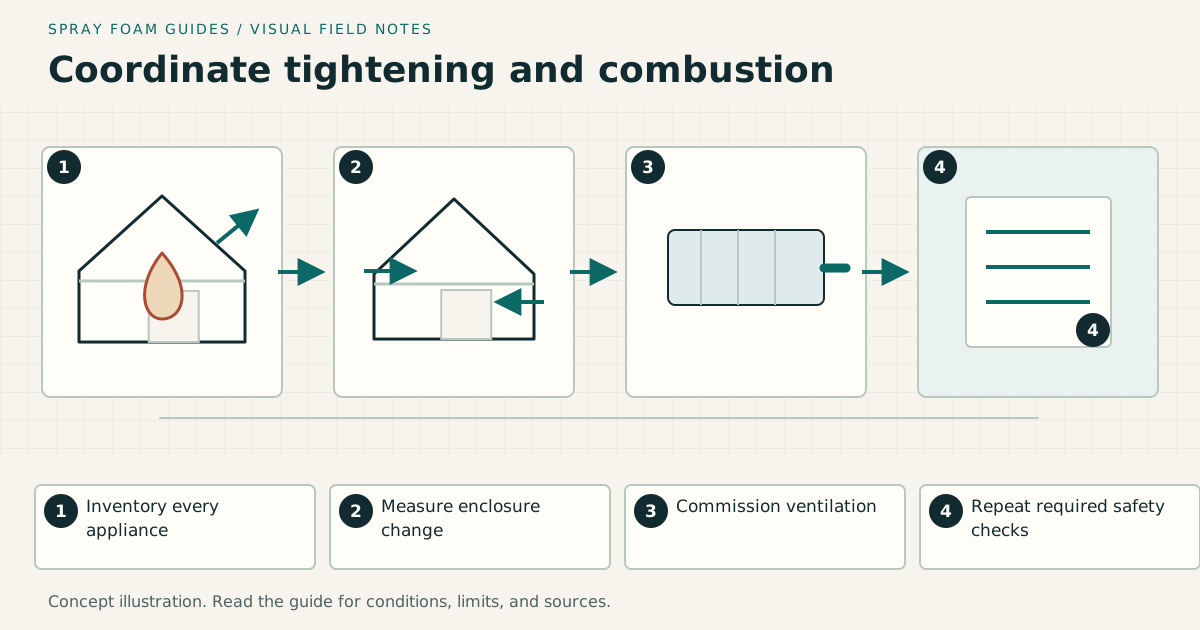
Air Sealing, Ventilation, and Combustion Appliances: Check the Whole House
Plan air sealing without creating unreviewed pressure, ventilation, makeup-air, exhaust, or combustion conditions around fuel-burning equipment.
Read the guide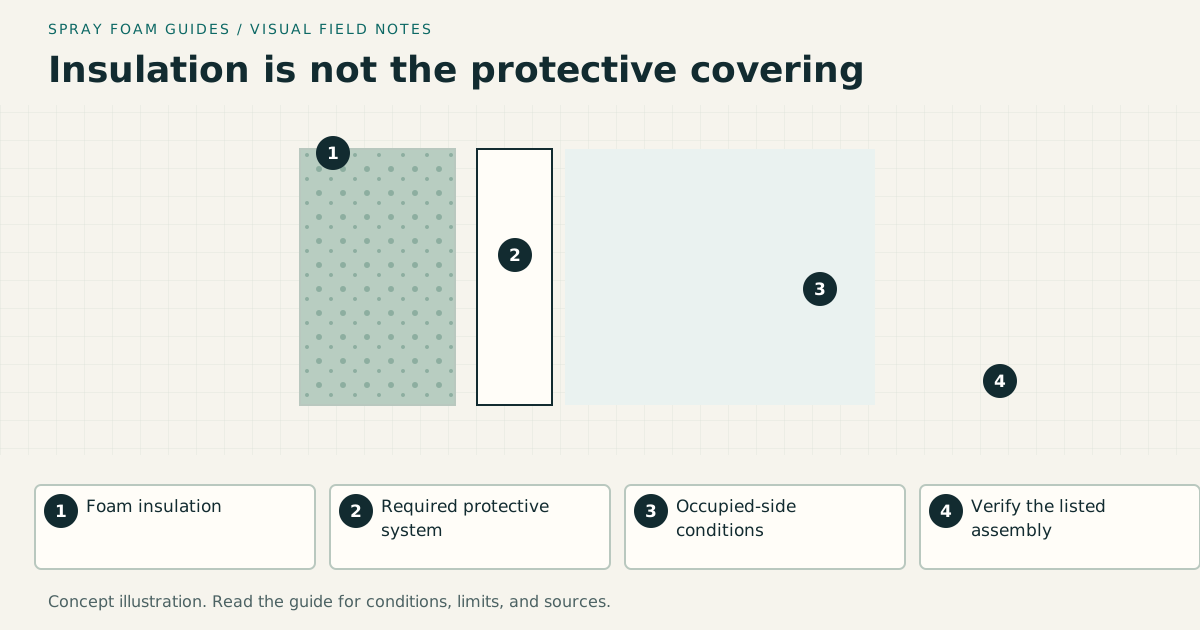
Class A, Fireblock, Firestop, Ignition Barrier, and Thermal Barrier
Keep common spray foam fire terms separate and verify the exact product, tested assembly, installed thickness, covering, code edition, and jurisdiction.
Read the guide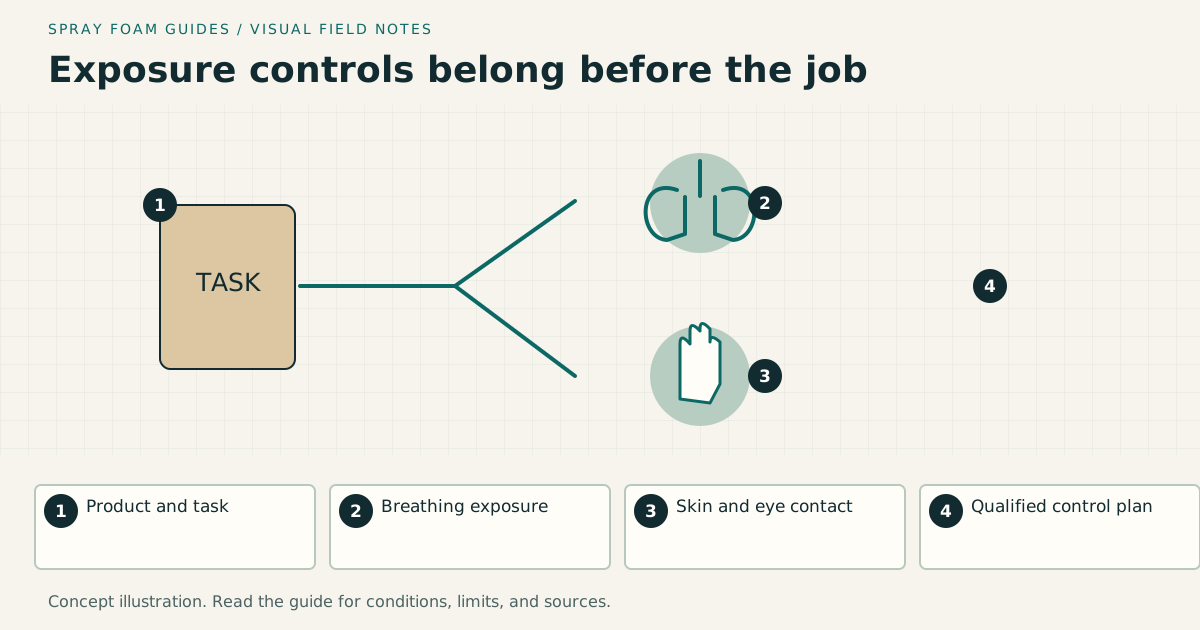
Spray Foam and Isocyanate Exposure: Know the Boundary
Understand why spray polyurethane foam application can create inhalation, skin, and eye exposure and why PPE is only one part of control.
Read the guide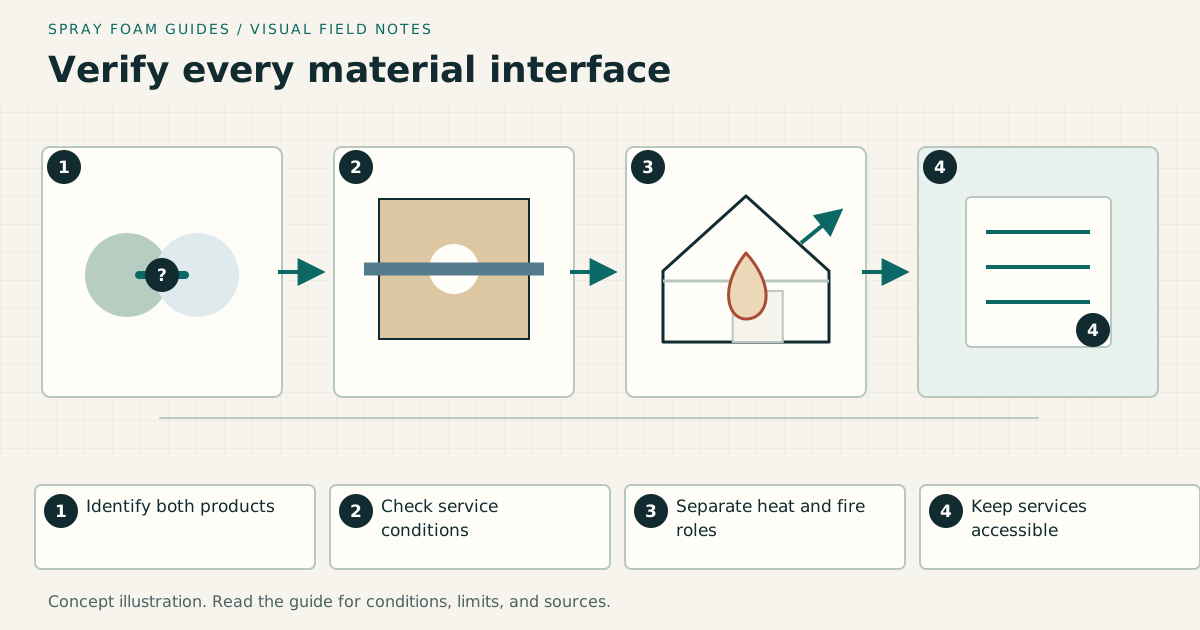
Spray Foam Compatibility with Wiring and Plastic Pipe
Verify spray foam around cable jackets, conduits, electrical boxes, CPVC and other plastic pipe, insulation, coatings, heat sources, and service connections.
Read the guide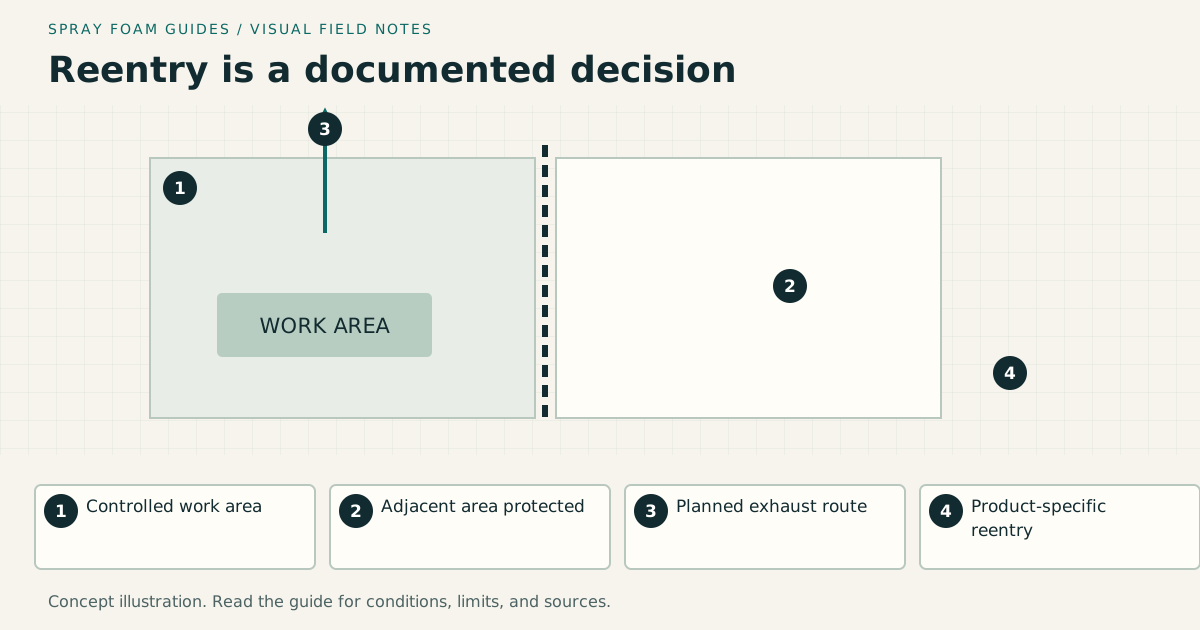
Spray Foam Ventilation, Re-Entry, and Re-Occupancy
Plan work-zone isolation, make-up air, outside exhaust, HVAC protection, continued ventilation, and product-specific re-entry decisions.
Read the guide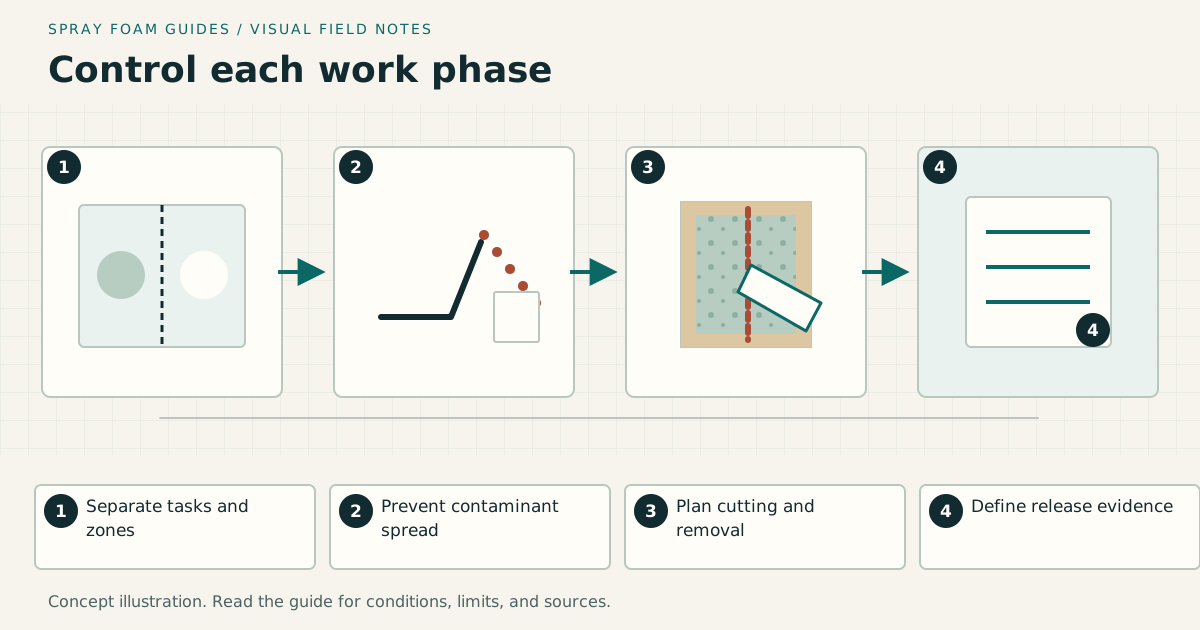
Spray Foam Work Zones, PPE, and Later Cutting or Removal
Plan distinct controls for application, can changes, cleanup, trimming, sanding, removal, inspection, and later trade work using exact hazard and task information.
Read the guide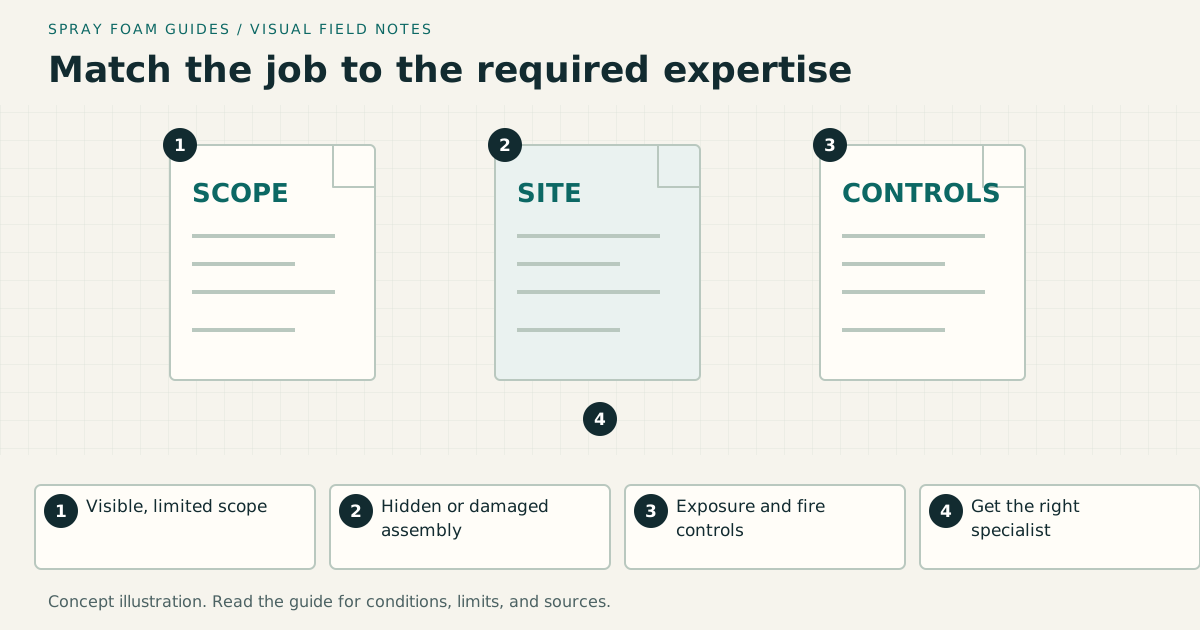
When Not to DIY Spray Foam
Use clear stop conditions for wet materials, roof conversions, combustion equipment, occupied work, two-component systems, fire protection, and failures.
Read the guideA useful next step
Bring better questions to the conversation.
Use the bid scope comparison to organize scope, documents, and questions for a qualified professional.