Control layers first
Treat the house as an assembly, not a collection of cavities.
Air, heat, water, and vapor move through the whole enclosure. These guides make those interactions visible.
06practical guides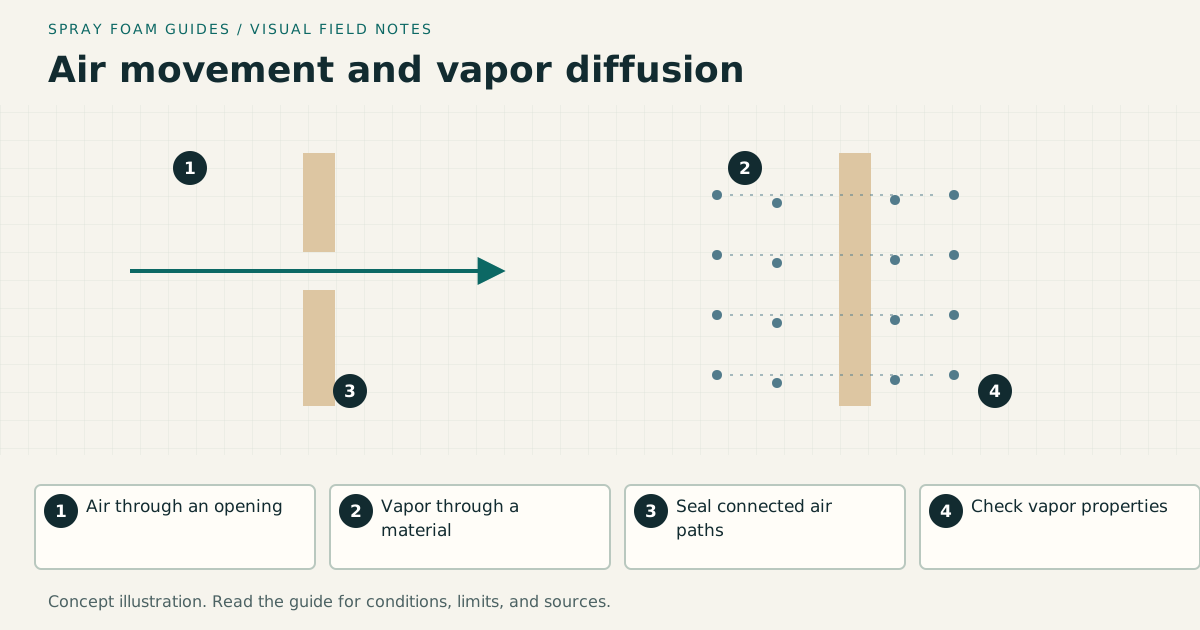
Air Barrier vs Vapor Retarder: Different Jobs
See how air, vapor, bulk water, and heat control layers differ, overlap, and connect before spray foam is added to an enclosure.
Read the guide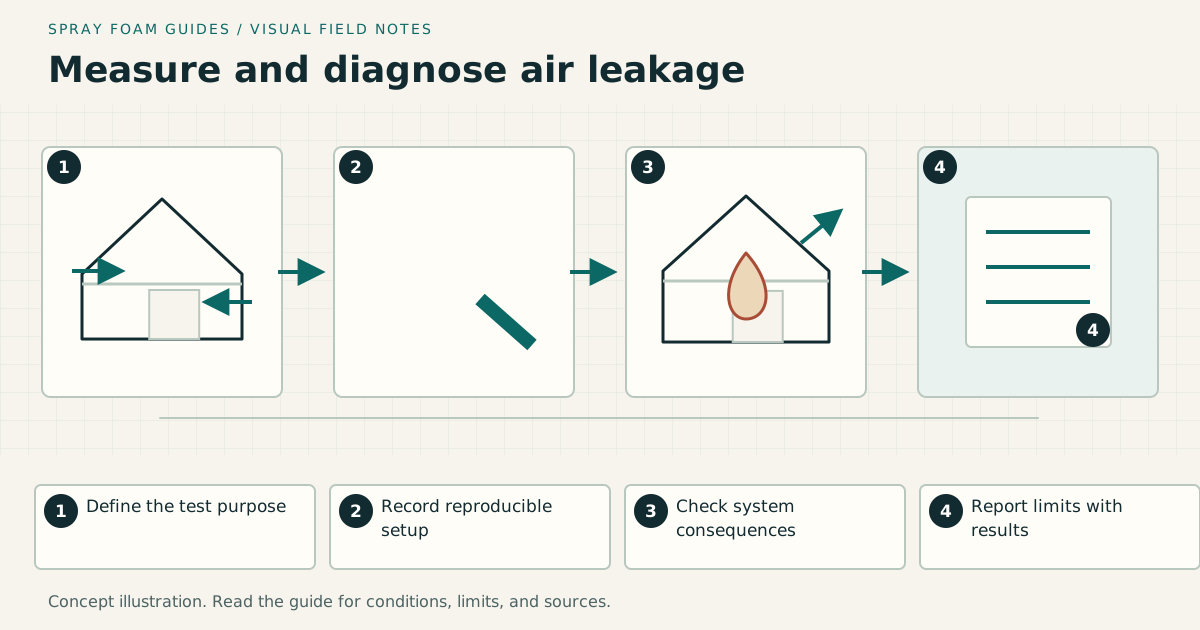
Air Leakage Testing and Verification: What the Numbers Can Prove
Use blower-door and pressure diagnostics to establish scope, compare conditions, locate leakage, and verify enclosure work without overreading one test result.
Read the guide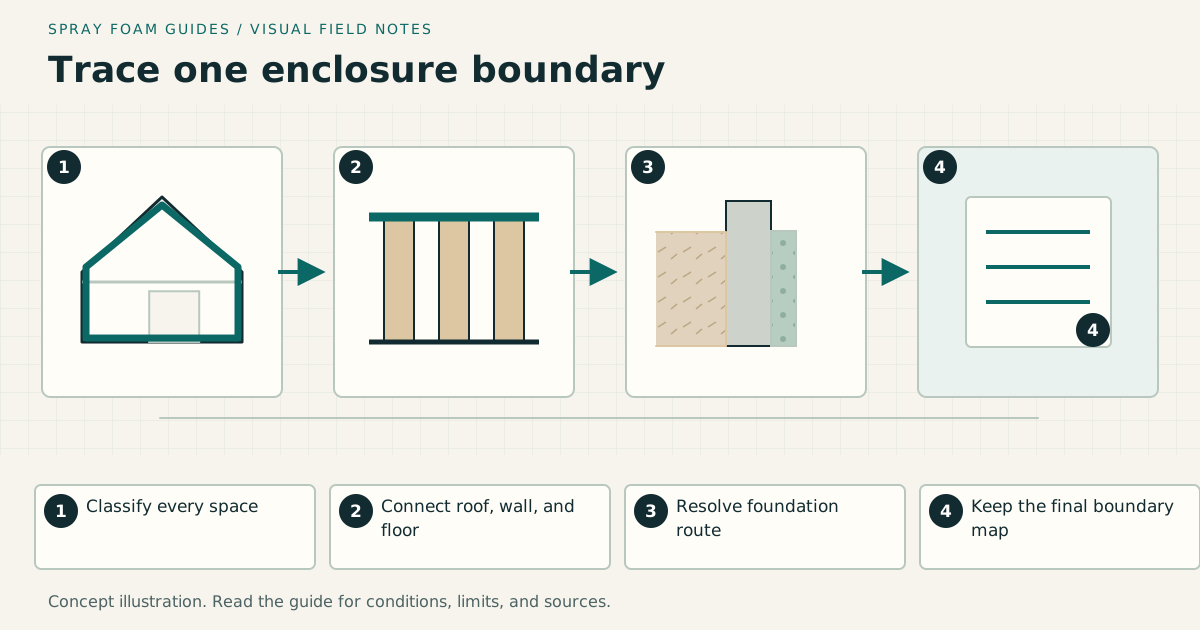
Conditioned Space and the Building Enclosure: Trace the Boundary First
Trace the air and thermal enclosure through attics, walls, floors, basements, crawl spaces, garages, additions, and service areas before choosing insulation.
Read the guide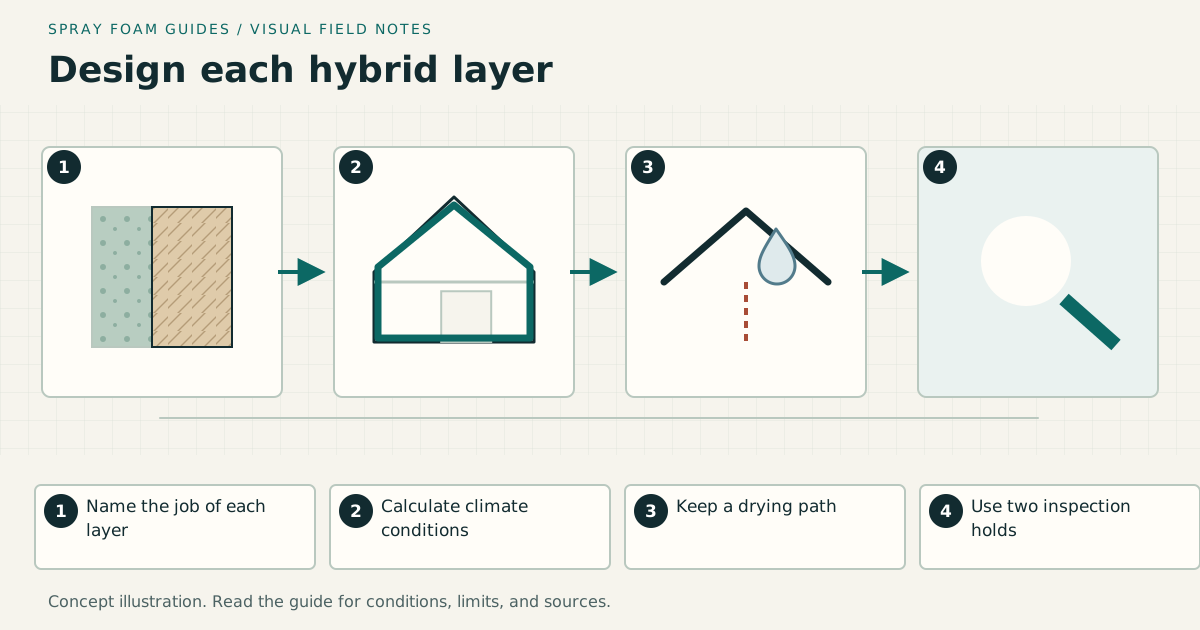
Hybrid Flash-and-Batt Assemblies: Foam, Fibers, and Condensation Control
Evaluate flash-and-batt wall or roof assemblies by climate, layer position, thickness, fibrous fill, air control, vapor control, drying, and code evidence.
Read the guide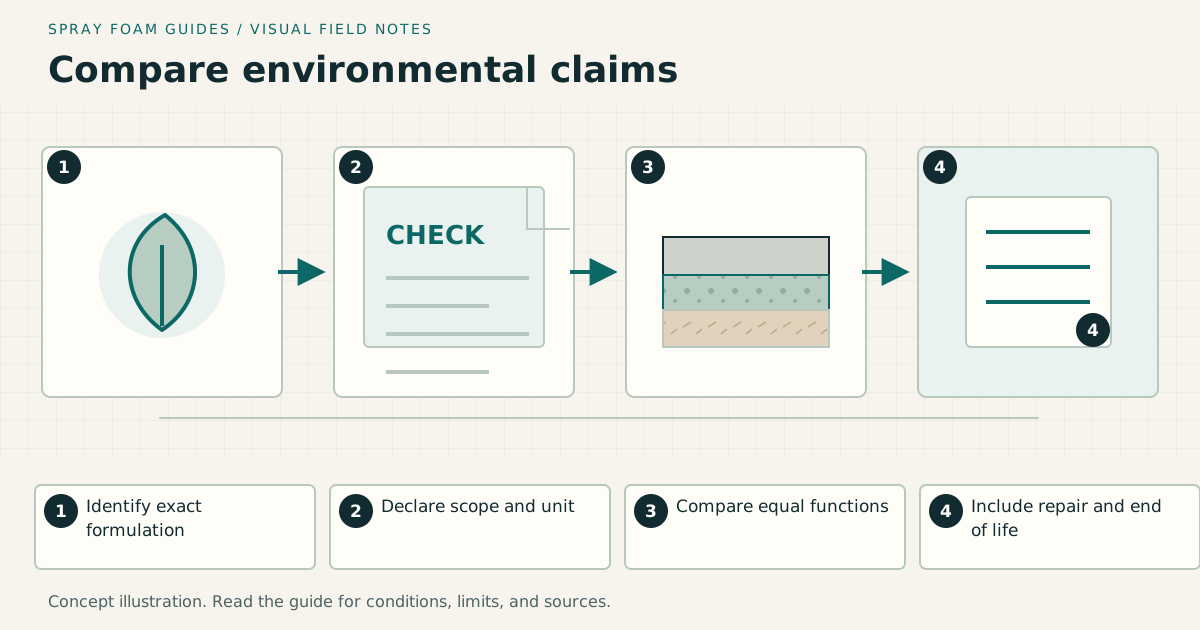
Spray Foam Environmental Impact and Blowing Agents: Compare Complete Claims
Compare blowing agents, material quantity, operational effects, durability, repair, waste, and end of life without reducing environmental impact to one label.
Read the guide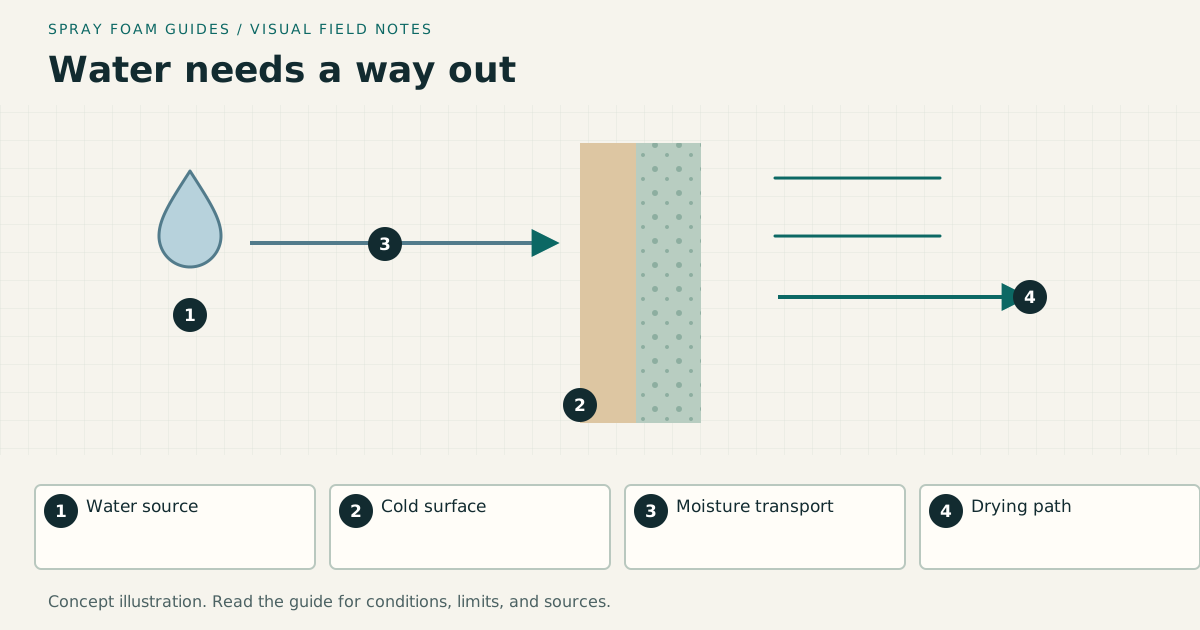
Spray Foam, Moisture, Condensation, and Drying Potential
Separate bulk water, air-carried moisture, vapor diffusion, and built-in moisture before deciding whether spray foam belongs in an assembly.
Read the guideA useful next step
Turn the reading into a plan.
Answer seven practical questions and see which conditions to investigate before choosing a material.