Symptoms before solutions
Recognize failure signals and know when to stop.
Use visible symptoms to organize safe next steps. Uncured foam, persistent odor, and health symptoms need professional escalation.
07practical guides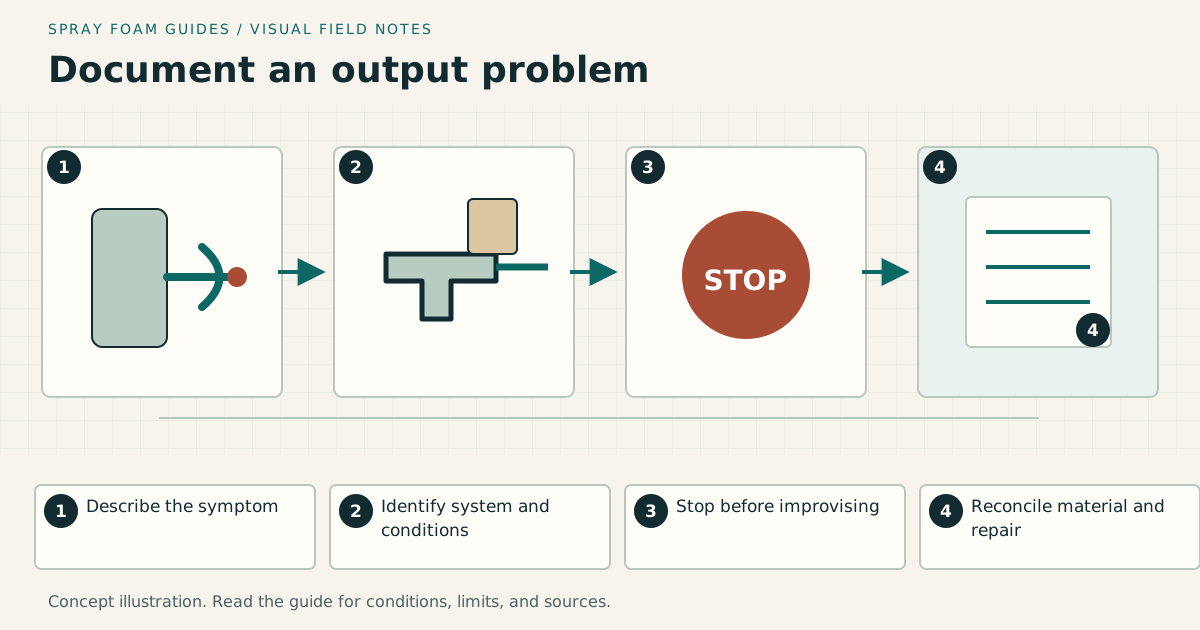
Low Yield, Poor Expansion, or a Clogged Foam System: Record Before Adjusting
Troubleshoot low output, poor expansion, uneven spray, and clogging by separating storage, temperature, age, pressure, mixing, substrate, and technique observations.
Read the guide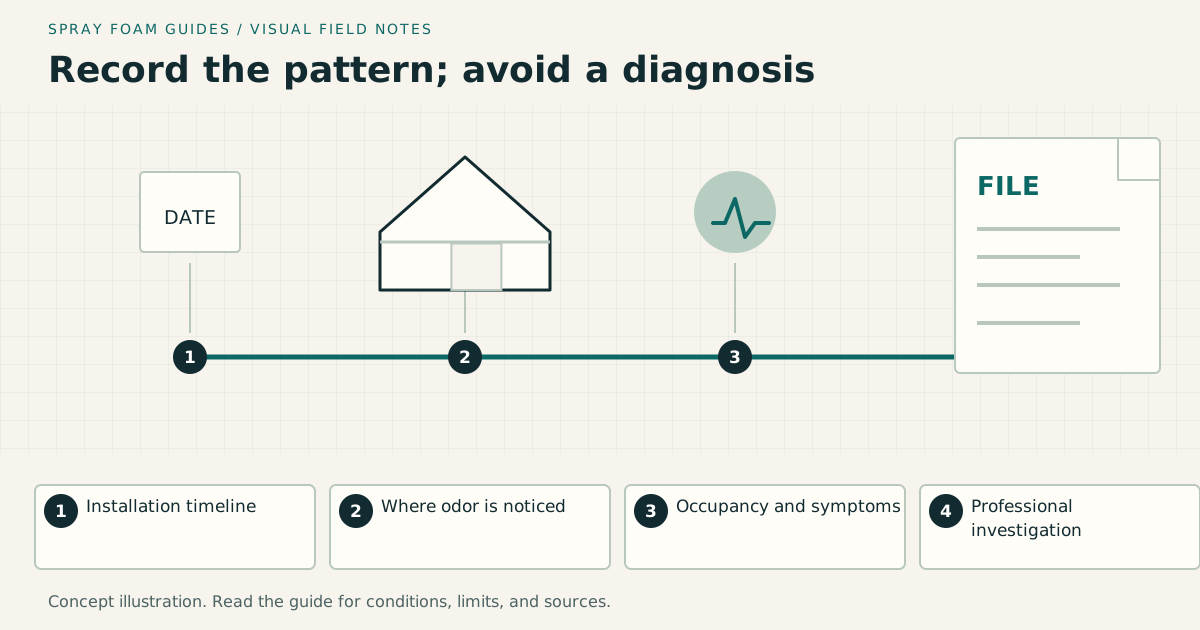
Persistent Spray Foam Odor: What to Do and What to Document
Use a safety-first response to persistent spray foam odor, health symptoms, uncured material, ventilation concerns, and contractor documentation.
Read the guide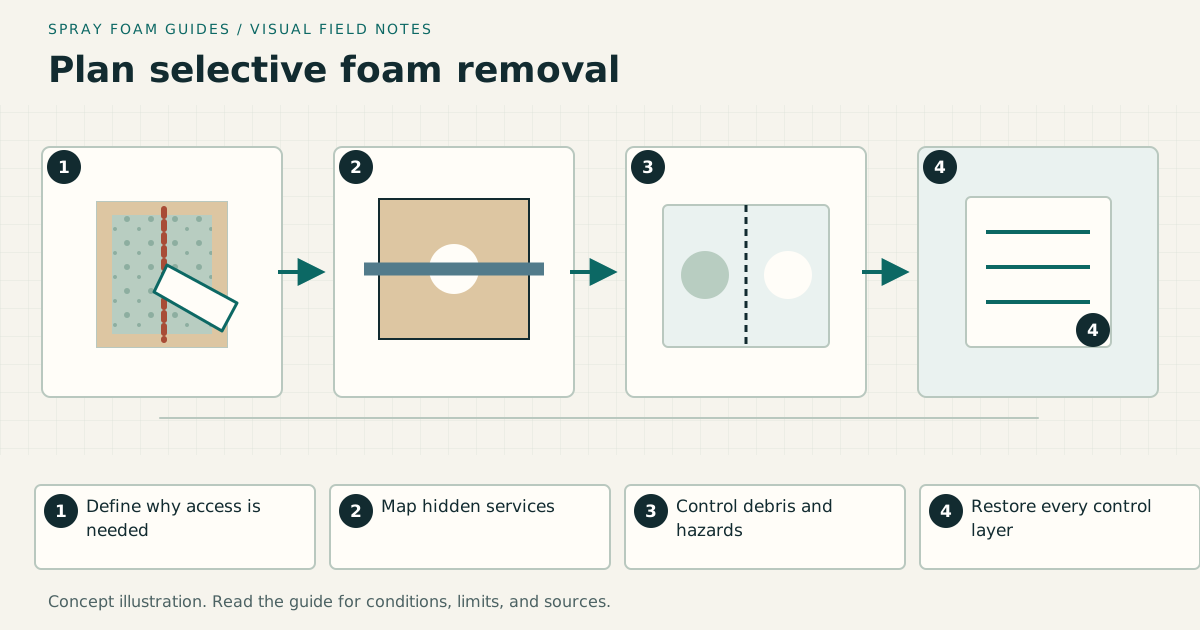
Removing Spray Foam and Planning Repairs: Open Only What You Can Control
Plan spray foam removal around hidden wiring, pipes, structure, moisture, fire, dust, substrate damage, waste, and restoration before cutting into an assembly.
Read the guide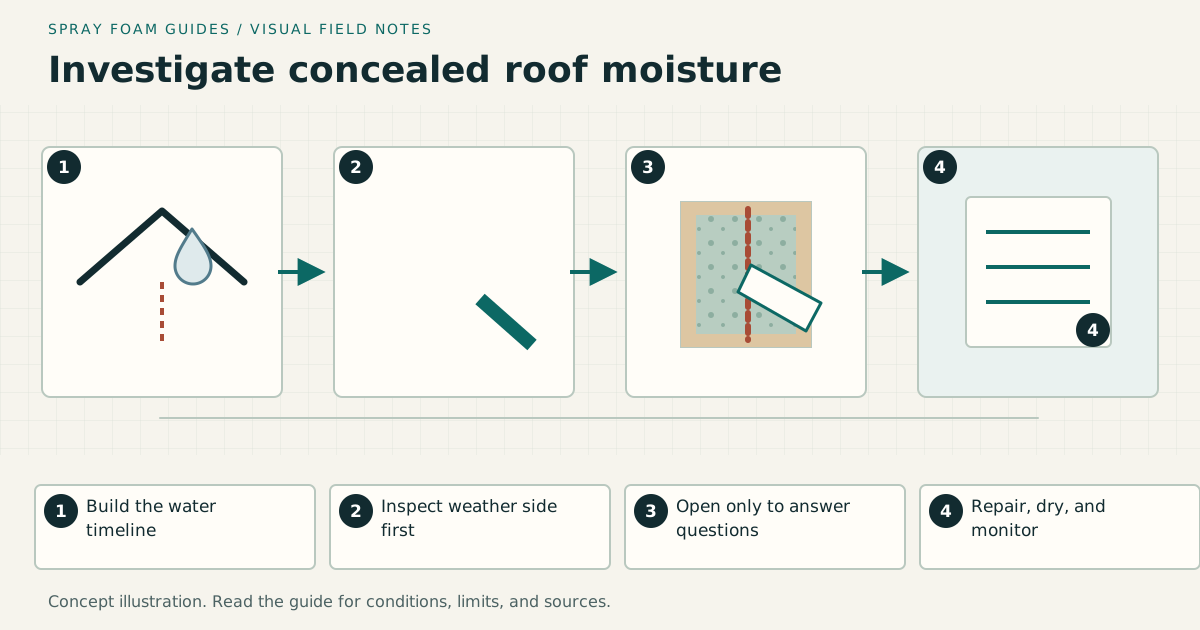
Roof Leaks and Hidden Sheathing Behind Spray Foam: Investigate the Water Path
Investigate a suspected roof leak when spray foam conceals the underside of sheathing using exterior evidence, moisture mapping, selective access, and repair records.
Read the guide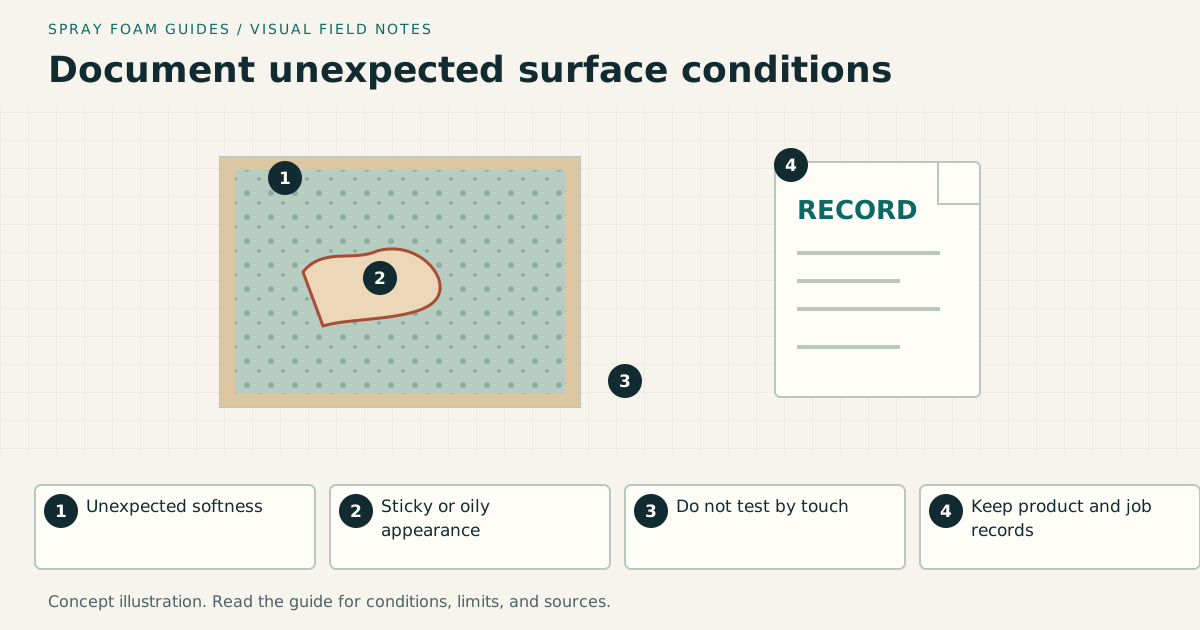
Soft or Sticky Spray Foam: What Needs Investigation?
Separate expected foam flexibility from persistent tackiness, oiliness, or unusual texture, and document concerns before trimming, covering, or re-entry.
Read the guide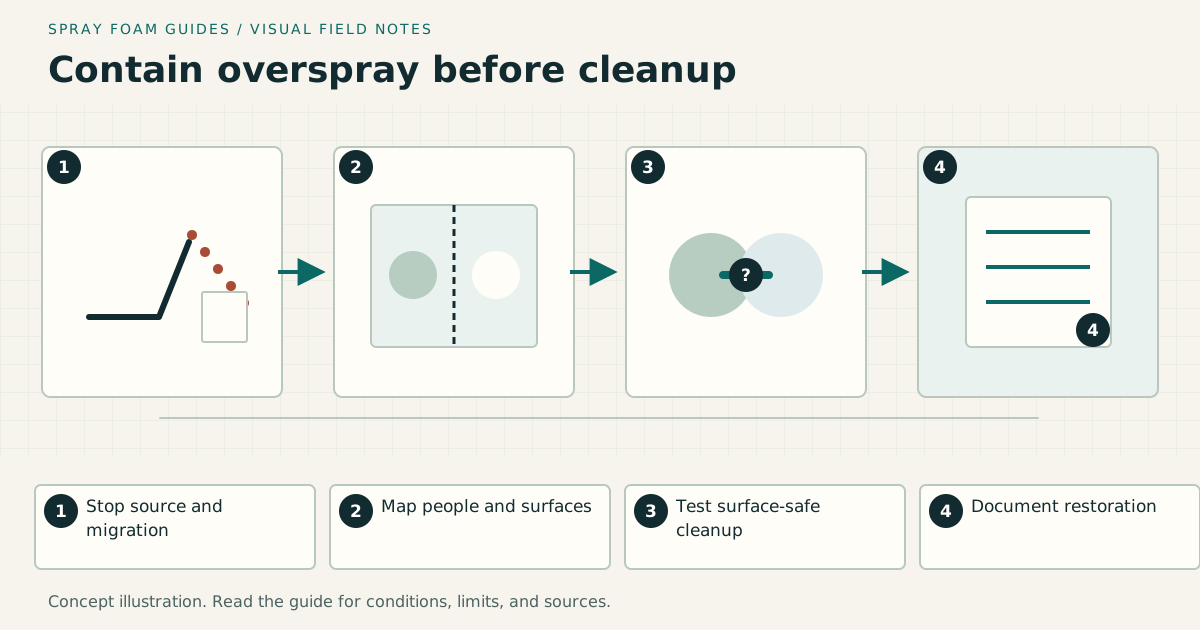
Spray Foam Overspray and Cleanup: Protect People, Surfaces, and Air Paths
Respond to spray foam overspray by distinguishing airborne spread, fresh or cured material, surface sensitivity, HVAC contamination, exposure, and remediation scope.
Read the guide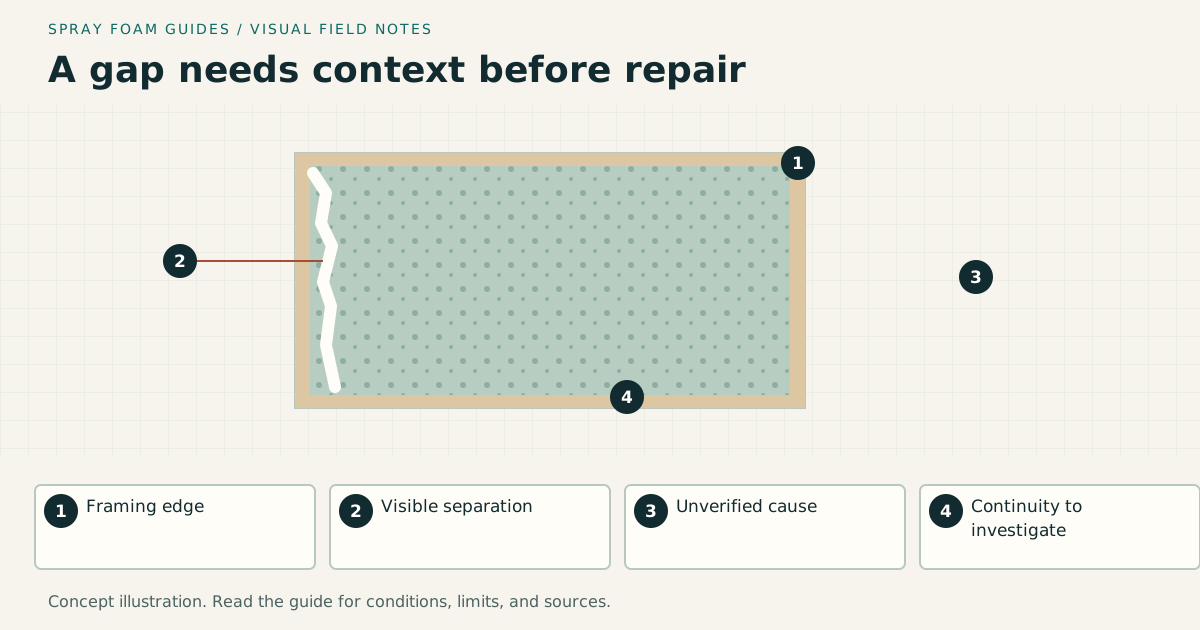
Spray Foam Shrinkage, Pull-Away, Cracks, and Voids
Inspect foam pull-away, shrinkage, cracks, voids, and uneven thickness; distinguish small touch-ups from patterns that need investigation.
Read the guideA useful next step
Bring better questions to the conversation.
Use the bid scope comparison to organize scope, documents, and questions for a qualified professional.