Concealed roof moisture
Roof Leaks and Hidden Sheathing Behind Spray Foam: Investigate the Water Path
A stain, odor, wet finish, or roof symptom shows that something needs investigation; it does not locate the entry point or prove foam caused it. Water can travel before becoming visible, especially when sheathing is concealed.
On this page
The short answer
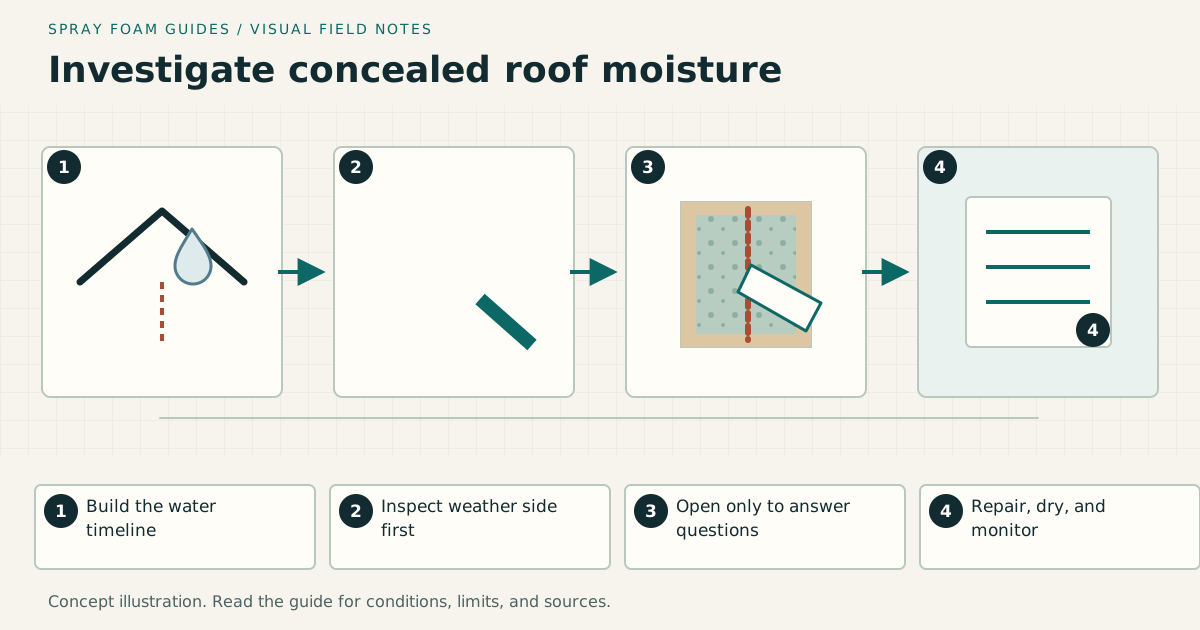
Stop active water, inspect the roof and drainage from the exterior, map moisture and history, use selective access where it changes the decision, repair the entry path and damaged materials, then restore and monitor the assembly.
This answer changes when…
- Roof type, age, slope, drainage, penetrations, flashings, weather event, and repair history
- Foam product, installation date, thickness, substrate record, roofline or ceiling boundary
- Interior stain, odor, moisture readings, wood condition, and extent over time
- Exterior inspection, safe access, infrared or other screening limits, and selective openings
- Drying, structural repair, roofing repair, insulation restoration, verification, and monitoring
Dotted terms have plain-language definitions. Browse the glossary ↗
Begin with the water event
Record when the symptom appeared, weather before it, wind direction, snow or ice, plumbing or HVAC operation, and any recent roof work. Photograph the visible condition with a scale and repeat photographs over time. A stain can remain after drying, while water can move along framing or between layers before appearing indoors.
PNNL’s roof pre-retrofit assessment supports examining the roof and existing conditions before insulation decisions. Once foam hides the deck underside, exterior records and planned access become especially important.
Do not confuse entry, reservoir, and appearance
| Evidence | Possible meaning | What still needs confirmation |
|---|---|---|
| Interior ceiling stain | Water reached or affected the finish | Entry point, current wetness, path, and source |
| Elevated surface or pin reading | Material may be wetter than reference areas | Instrument, correction, depth, species, and extent |
| Infrared anomaly | Surface temperature differs | Moisture, air leakage, insulation, sun, wind, and corroboration |
| Roof defect above stain | Plausible entry | Whether water path connects to damage |
| Odor | Material or condition deserves investigation | Chemical identity, moisture, source, and exposure significance |
| Firm dry foam surface | Accessible face appears sound | Hidden sheathing condition and prior wetting |
Use calibrated or appropriate instruments and record method, location, depth, and comparison area. Moisture screening should create a map and guide access; it does not replace direct inspection where sheathing condition controls the repair.
Inspect from the weather side
Have the roof safely inspected for covering damage, flashing, penetrations, valleys, curbs, sidewalls, chimneys, vents, fasteners, drains, gutters, ice effects, and prior patches. Flat and low-slope roofs may need a professional moisture survey or cores under an approved plan. Steep roofs require safe access and weather protection.
Repairing an interior stain or injecting more foam does not stop exterior water. Establish temporary water control if needed, then design the permanent roof repair for the actual system.
Selective access answers a defined question
Open only where the result will change the action: to inspect sheathing strength, locate an edge of wet material, identify a water path, test a service, or establish a repair boundary. Choose access from above or below by roofing type, weather, structural condition, interior finish, exposure control, and restoration feasibility.
Before cutting, trace wiring, ducts, pipes, fasteners, and structure. Use the removal guide to set containment and stop lines. Preserve representative photographs and samples only under the investigation plan.
Repair the assembly, then verify drying
Remove and replace damaged roofing, sheathing, framing, or insulation as the responsible professionals direct. Do not encapsulate wet or deteriorated wood. Reconnect air, thermal, vapor, and fire-control layers and restore any ventilation route or roofline design intentionally.
Define drying acceptance using material, instrument, and project conditions rather than a universal percentage copied from another substrate. After repair, monitor through suitable weather events and repeat mapped observations. Keep access or sensors only when they serve a defined maintenance plan.
Investigation record
- Stabilize active water and protect occupants and contents.
- Build a weather, symptom, installation, and repair timeline.
- Inspect exterior roof, drainage, flashings, and penetrations.
- Map interior and accessible assembly conditions.
- Select access points tied to specific questions.
- Identify extent and repair the entry path and damaged materials.
- Verify dry, sound substrates before restoring insulation and finishes.
- Test or observe the repair under planned conditions.
- Deliver roof, foam, access, repair, and monitoring records.
Stop for unsafe roof access, active electrical contact, structural softness, mold or contamination beyond the work plan, unclear foam condition, or weather that prevents a controlled opening. Neither foam nor the absence of visible drips proves the roof deck is dry.
Research & references
Sources used for this guide
- Pre-Retrofit Assessment of Attics, Ceilings, and RoofsU.S. Department of Energy / Pacific Northwest National Laboratory · government guidance · United States; existing-condition assessment, not site inspection or hazardous-material clearance · accessed 2026-09-06
- Below Deck Spray Foam Insulation for Existing RoofsU.S. Department of Energy / Pacific Northwest National Laboratory · government guidance · United States; complete roof-retrofit planning with local adoption and exact-product conditions reviewed separately · accessed 2026-09-06
- A Brief Guide to Mold, Moisture and Your HomeU.S. Environmental Protection Agency · government guidance · United States · accessed 2026-09-05
- Building Enclosure: Air Barriers vs Vapor BarriersDOE Building Science Education · government guidance · United States; educational control-layer concepts · accessed 2026-09-05
- Technical DocumentsSpray Polyurethane Foam Alliance · official standard portal · United States industry guidance index; confirms distinct technical scopes, while full document access, exact system evidence, code acceptance, and site design remain separate · accessed 2026-09-09
A citation supports a specific statement, not every possible assembly or local code interpretation.