Selective removal
Removing Spray Foam and Planning Repairs: Open Only What You Can Control
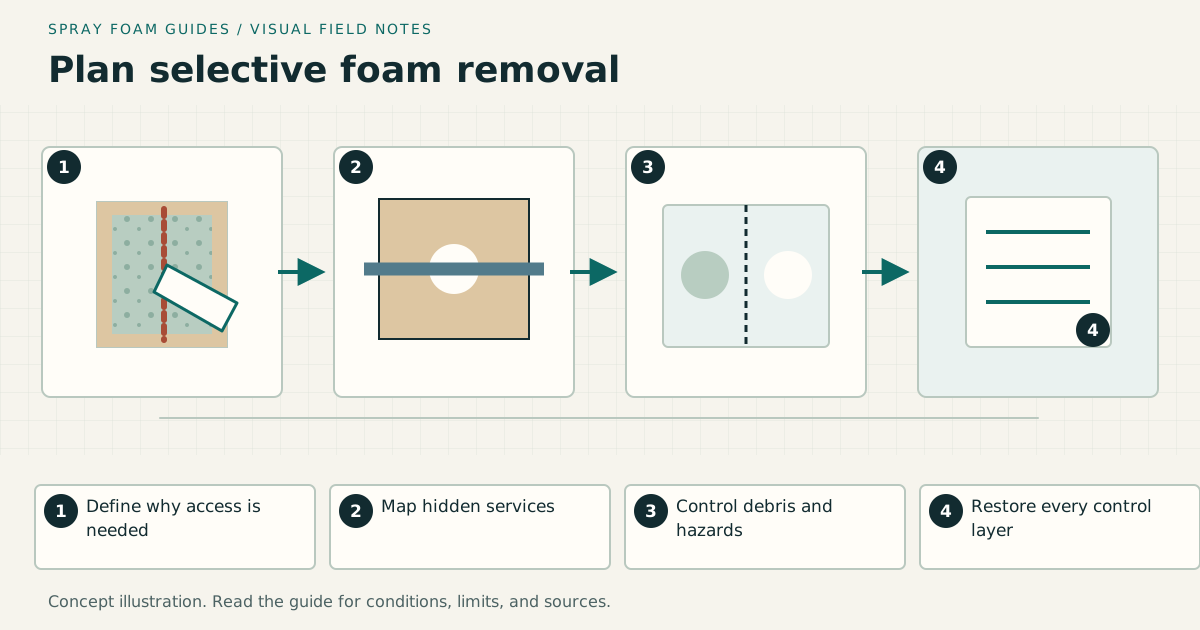
Removal is a demolition project inside a concealed assembly. First identify why access is needed, what must remain, which services and hazards may be hidden, and how the air, water, thermal, fire, and finish layers will be restored.
On this page
The short answer
Do not begin with a saw or solvent. Investigate the assembly, isolate hazards, establish selective access and stop limits, protect structure and services, control debris, and approve the restoration detail before removal.
This answer changes when…
- Reason for removal, evidence of extent, acceptance criteria, and decision authority
- Foam type and condition, substrate, adhesion, depth, cavities, and concealed interfaces
- Wiring, pipe, ducts, fasteners, structure, membranes, coatings, and rated construction
- Dust, uncured material, heat, contamination, asbestos or lead possibility, and occupied areas
- Access method, waste, inspection hold points, repair materials, testing, and owner record
Dotted terms have plain-language definitions. Browse the glossary ↗
Write the reason and the acceptance condition
Removal may be needed to reach a leak, replace sheathing, repair wiring, expose structure, address suspect foam, restore a vent path, or prepare for a new assembly. Each reason implies a different extent. State what evidence triggered the work and who will decide when enough material has been removed.
Do not promise “complete removal” without defining accessible surfaces, substrate damage, residue, and verification. Foam bonded inside irregular framing or corrugated panels may not separate cleanly. The restoration design should account for realistic remaining material.
Investigate before disturbance
Collect installation records, product identity, photographs, plans, service maps, leak history, odor or symptom records, and previous repairs. Use selective non-destructive investigation where useful, then open a controlled location that can be repaired. Do not drill blindly into a cavity to discover what foam hides.
| Hidden condition | Removal risk | Required control |
|---|---|---|
| Electrical cable or box | Cut, heat, buried access, damaged jacket | De-energize, trace, expose under electrical scope |
| Water, gas, refrigerant, or drain line | Leak, pressure release, contamination | Identify, isolate, and involve responsible trade |
| Roof or wall membrane | New water path | Exterior weather plan and repair detail |
| Structural wood, panel, or connector | Section loss or hidden deterioration | Controlled tools and structural inspection |
| Fireblocking or rated assembly | Loss of required separation | Identify assembly and approved restoration |
| Suspect old coating or insulation | Hazardous dust or fibers | Material assessment before disturbance |
Material state changes the hazard plan
Sound cured foam, brittle or charred material, and soft or chemically suspect material should not share one removal procedure. Heating, grinding, or aggressive cutting can create dust or decomposition products. Solvents may damage substrates and add chemical exposure without removing cured material effectively.
Use the task-based work-zone guide to define isolation, ventilation, source capture, protective equipment, decontamination, and release. If old vermiculite, pipe insulation, coating, fireproofing, or other suspect material may be disturbed, stop for the appropriate assessment.
Choose access around the repair
Sometimes removing a finish from the clean side offers better control than cutting through foam. A roofer may need access from above to replace sheathing. An electrician may need a service opening aligned with wiring. Compare access routes by water risk, structural damage, exposure, occupied-space disruption, and ability to restore control layers.
Set physical stop lines and inspection stages. Remove in small sections near hidden services. Keep removed pieces or mapped photographs when they help show thickness, condition, and bond. Do not erase leak stains or char patterns before the investigator records them.
Design the restoration before demolition
The repair must reconnect rain, air, thermal, vapor, fire, acoustic, structural, and finish functions that the opening interrupts. Name compatible patch materials and sequences. Include substrate repair, drying, service testing, insulation replacement, required protective layer, and final verification.
Controlled sequence
- Define reason, evidence, extent, and acceptance authority.
- Map the assembly and every known service.
- Assess moisture, fire, chemical, biological, and legacy-material hazards.
- Select an access route and weather or containment plan.
- Isolate energy and establish task-specific worker controls.
- Remove incrementally to inspection hold points.
- Repair the root defect and verify services and substrate.
- Restore all control layers and protective finishes.
- Test, photograph, and update the owner record.
Stop for unexplained soft material, strong or changing odor, worker symptoms, active water, energized or unidentified services, structural damage, fire evidence, or suspect regulated material. A repair is complete only when the original reason is resolved and the opened assembly has a documented, inspectable closure.
Research & references
Sources used for this guide
- Potential Chemical Exposures From Spray Polyurethane Foam (archived)U.S. Environmental Protection Agency · government guidance · United States; archived guidance · accessed 2026-09-05
- Isocyanates: OverviewOccupational Safety and Health Administration · government guidance · United States workplaces · accessed 2026-09-05
- Protect Your Family from Exposures to AsbestosU.S. Environmental Protection Agency · government guidance · United States; homeowner planning and professional roles, with applicable state and local requirements verified separately · accessed 2026-09-06
- Pre-Retrofit Assessment of Attics, Ceilings, and RoofsU.S. Department of Energy / Pacific Northwest National Laboratory · government guidance · United States; existing-condition assessment, not site inspection or hazardous-material clearance · accessed 2026-09-06
- Technical DocumentsSpray Polyurethane Foam Alliance · official standard portal · United States industry guidance index; confirms distinct technical scopes, while full document access, exact system evidence, code acceptance, and site design remain separate · accessed 2026-09-09
A citation supports a specific statement, not every possible assembly or local code interpretation.