Containment failure
Spray Foam Overspray and Cleanup: Protect People, Surfaces, and Air Paths
Overspray can affect people, vehicles, glass, finishes, equipment, ducts, soil, or neighboring property. Stop the source, protect the area, document the material state, and choose cleanup only after identifying each surface and exposure.
On this page
The short answer
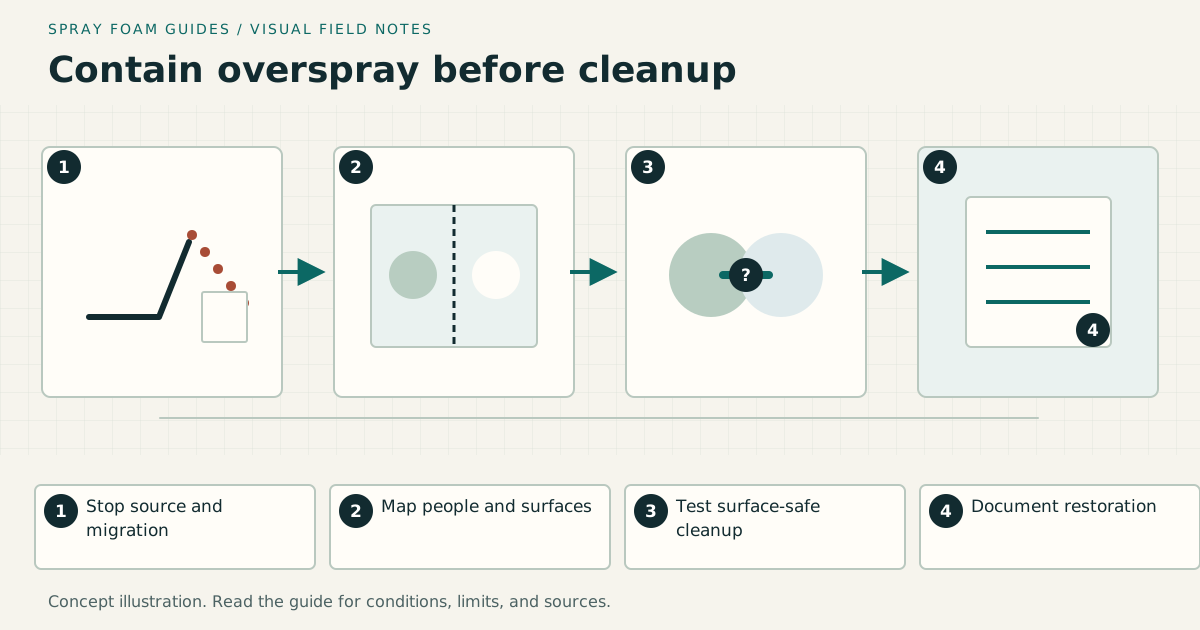
Do not scrub, dissolve, heat, or sand first. Stop application, address exposure and migration, preserve evidence, obtain exact product guidance, test any cleanup method on the affected surface, and document restoration.
This answer changes when…
- Exact foam, coating, primer, solvent, component, cure state, and application time
- People, eyes, skin, clothing, food, animals, plants, air intakes, ducts, and occupied rooms
- Glass, paint, metal, masonry, roofing, flooring, vehicles, equipment, and sensitive finishes
- Wind, containment, ventilation, HVAC operation, migration route, and affected boundary
- Emergency response, insurer or property notification, test area, remediation, waste, and release
Dotted terms have plain-language definitions. Browse the glossary ↗
Stop the source and freeze the scene
Stop application when material leaves the controlled zone. Secure equipment under the exact shutdown procedure, prevent unprotected entry, and keep people away from affected surfaces. If a person may have been exposed, use the safety data and emergency instructions and seek appropriate medical help. Property cleanup comes after immediate health and fire concerns.
Record time, product, component, lot, wind, ventilation, containment, equipment state, and who was present. Photograph wide views and close views without walking contamination into clean areas. Do not begin an aggressive cleanup that destroys evidence or enlarges the affected zone.
Map how material moved
Overspray may travel outdoors with wind, indoors through open doors or pressure paths, or through a running HVAC system. Inspect air intakes, returns, supply registers, exhaust paths, neighboring surfaces, vehicles, vegetation, and porous contents. Use qualified help where the extent is uncertain.
| Affected condition | First decision | Avoid until verified |
|---|---|---|
| Eye, skin, breathing, or systemic symptom | Follow SDS emergency pathway and medical advice | Property-cleanup improvisation |
| Fresh uncured deposit | Exact chemical and surface compatibility | Smearing, water, or random solvent |
| Cured dot on durable finish | Surface-specific removal test | Metal blade or abrasive across the full area |
| Glass, coating, plastic, or vehicle finish | Manufacturer and restoration guidance | Solvent or scraping without a test area |
| Porous fabric, soil, or plant | Extent and disposal assessment | Driving material deeper or dispersing dust |
| Duct or air-handler concern | Mechanical isolation and inspection | Restarting equipment to “air it out” |
Fresh and cured material require different plans
Uncured components can spread by wiping and may react with a cleaner or substrate. Cured foam may need controlled mechanical removal, which can scratch finishes and create particles. No universal solvent or tool is safe for every product and surface.
Obtain current product guidance and the affected material manufacturer’s cleaning limits. Make a small, inconspicuous test under the approved method. Document appearance, gloss, coating thickness, seal performance, or other relevant acceptance criteria before expanding the method.
HVAC spread is its own investigation
If application occurred near an intake or a system operated during loss of containment, keep the system off until the mechanical and exposure teams define inspection. Check filters, coils, drain pans, ducts, plenums, insulation, and occupied spaces as appropriate. A filter change alone does not demonstrate that the system is clean.
Use the building layout and pressure paths to determine affected zones. Cleanup ventilation should not distribute contaminants to new rooms or exhaust toward people and intakes.
Protect evidence and assign responsibility
Notify the project lead, affected property owner, and insurer or responsible parties under the contract. Preserve product containers, batch information, daily reports, photographs, weather data, and samples only when an approved method calls for them. Record every cleanup chemical and tool used.
Remediation sequence
- Stop application and control the scene.
- Respond to exposure and emergency conditions.
- Prevent migration through people, tools, wind, and air systems.
- Map materials, surfaces, rooms, equipment, and neighboring property.
- Obtain exact product and surface-cleaning instructions.
- Agree on test areas and acceptance criteria.
- Remove material with containment and waste controls.
- Inspect restored surfaces and affected air systems.
- Document release, remaining limitations, and repairs.
Stop cleanup if the method damages a finish, creates dust or fumes outside the controlled zone, reaches energized equipment, disturbs suspect hazardous material, or exposes unprotected workers. The final record should distinguish cleaned, repaired, replaced, monitored, and unresolved items rather than declaring the whole event solved by visual appearance.
Research & references
Sources used for this guide
- Safer Workplace Practices for Spray Polyurethane Foam Installation (archived)U.S. Environmental Protection Agency · government guidance · United States; archived guidance · accessed 2026-09-05
- Potential Chemical Exposures From Spray Polyurethane Foam (archived)U.S. Environmental Protection Agency · government guidance · United States; archived guidance · accessed 2026-09-05
- Isocyanates: OverviewOccupational Safety and Health Administration · government guidance · United States workplaces · accessed 2026-09-05
- Hazard Communication Standard: Safety Data SheetsOccupational Safety and Health Administration · government guidance · United States workplaces · accessed 2026-09-05
- Quick Safety Tips for Spray Polyurethane Foam Users (archived)U.S. Environmental Protection Agency · government guidance · United States; archived guidance · accessed 2026-09-05
A citation supports a specific statement, not every possible assembly or local code interpretation.