Failure symptom: continuity
Spray Foam Shrinkage, Pull-Away, Cracks, and Voids
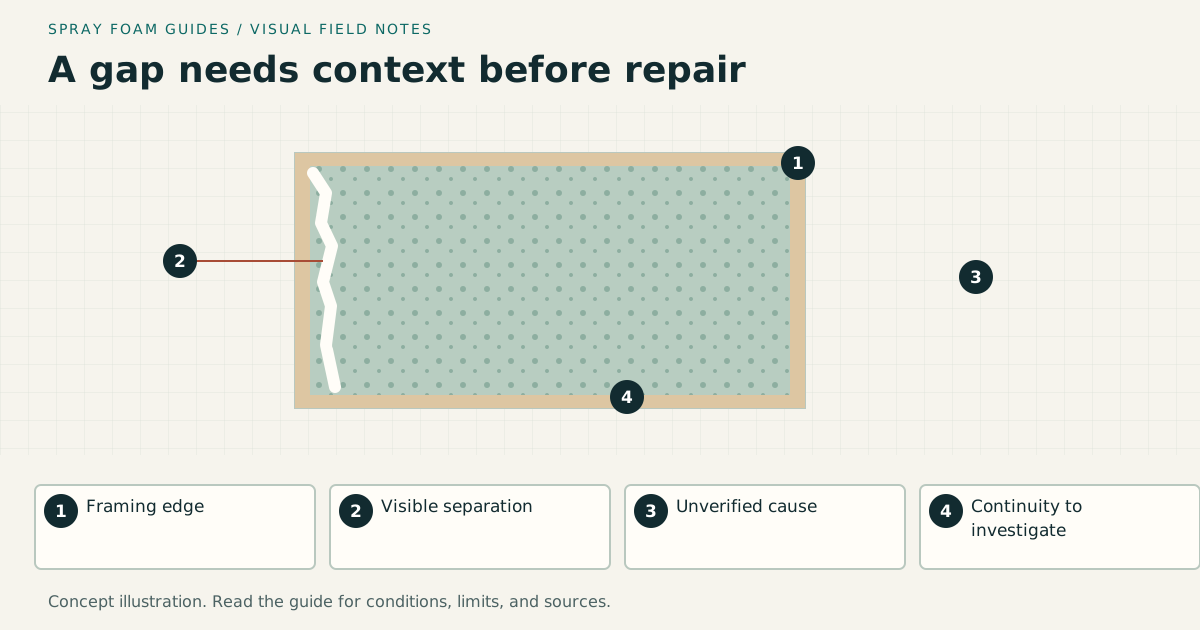
A gap between foam and framing can interrupt the intended insulation or air-control layer. Its effect depends on the assembly and any other continuous control layers. Application conditions, adhesion, moisture, and movement need investigation before a cause or repair is assigned.
On this page
The short answer
Map the full pattern before patching. Small, isolated misses in otherwise sound, cured foam may be repairable under manufacturer instructions. Repeated pull-away, cracking, odor, softness, scorching, or wet substrate calls for a cause investigation before more foam is applied.
This answer changes when…
- The gap is isolated or repeats along studs, sheathing seams, and spray passes
- The underlying foam matches the product’s expected cured condition or shows other concerning symptoms
- The substrate is dry, clean, and stable
- The defect breaks a required air, thermal, or fire-control layer
Dotted terms have plain-language definitions. Browse the glossary ↗
Inspect as a pattern
Use existing records and photographs taken only from areas cleared for access. Leave intrusive inspection and thickness measurements of suspect material to the qualified assessor. Build a location grid that includes:
- Location and length of each gap.
- Orientation relative to studs, seams, passes, and lifts.
- Available installer or assessor thickness measurements, including thin areas and how they were measured.
- Visible texture, color, and existing odor observations without touching, close-up sniffing, or disturbing suspect foam.
- Substrate type, staining, contamination, or movement.
- Time since application and environmental conditions.
One close-up photo can exaggerate or hide the scale. A full elevation and measured grid show whether continuity is actually lost.
A photograph cannot approve a repair
Use the roof-installation quality checks from Building America as a reason to document depth and continuity, not as a universal patch recipe. Ask the manufacturer and responsible installer to distinguish an installation miss from movement, loss of adhesion, or a broader process problem. A smooth-looking patch does not verify what remains beneath it.
Name what you can see without assigning a cause
A miss is an area that appears not to have received the intended coverage. Pull-away describes a separation at the bond with another surface. A crack is a break within the foam, and a void is an unfilled space. These descriptions help organize an inspection, but a homeowner’s photograph cannot reliably establish why the condition developed.
Use neutral language in the record: “continuous separation along the left side of bay 4” is more useful than “bad chemical ratio.” Include a wide view showing where bay 4 sits in the wall. If a condition was noticed only after another trade worked nearby, record that timing without assuming the trade caused it.
Do not peel material away to see how far the defect extends. Suspect cure conditions and concealed components require a qualified inspection plan. If there is unusual heat, smoke, or an immediate fire concern, leave and contact emergency services.
Compare three defect patterns
One unfilled corner: an isolated coverage miss may have a limited repair scope if the surrounding material and substrate are accepted. Ask the manufacturer or responsible contractor to identify the repair method and verify that the area really is isolated before patching.
A repeated line along many framing members: a pattern across bays deserves broader investigation. The assessor may need to review application conditions, adhesion, material behavior, and framing movement. Filling each line separately could conceal the common cause.
Gaps accompanied by oily texture, persistent tackiness, or unusual odor: treat the additional symptoms as separate concerns that change the inspection and exposure plan. Use the soft or sticky foam guide and odor-response guide before accepting a cosmetic repair.
These examples show how scope changes with evidence. They are not a chart for identifying chemistry by appearance.
Ask which function the defect affects
A gap in the intended air-control layer may connect indoors with an exterior or unconditioned space. A thin area can affect the thermal specification. A disturbance through a coating or covering can raise a separate fire-protection question. Ask the assessor to identify each affected function and how the proposed correction restores it.
The entire assembly matters. A visible foam gap may sit behind another continuous air-control layer, but that does not automatically make it acceptable under the insulation specification. Conversely, a small opening at a critical transition may matter even when most cavities look well covered.
Appropriate air-leakage diagnostics or thermal imaging can sometimes help a qualified professional investigate a completed enclosure. Such tests have conditions and limitations, and they do not establish the chemical condition of foam. Ask what question the method answers before treating an image or single test result as a complete acceptance record.
Request a repair scope with boundaries
The written repair proposal should identify affected locations, the basis for retaining adjacent material, required removal or preparation, compatible replacement materials, access controls, and restoration of any protective finish. It should also say who verifies the completed work before concealment.
If the original foam identity is unknown, flag that uncertainty before introducing another product. Do not assume every polyurethane foam bonds acceptably to every aged, dusty, coated, or suspect surface. Written manufacturer guidance or an appropriate assessment should support the detail.
For widespread defects, ask whether the investigation will include locations that look normal from the room side. The point is to determine the affected extent, not merely improve the easiest visible areas. Keep any proposed intrusive inspection and sample collection under professional control.
Close the issue with a record of the finished result
Retain before-and-after photographs from matching locations, the manufacturer’s written direction, the contractor’s repair log, and thickness or continuity verification. Document any areas excluded from the repair and the reason. A statement that the crew “touched everything up” gives a future owner little usable information.
If movement or water entry contributed, include those corrective measures in the record and identify any follow-up inspection. The moisture guide explains why a dry-looking patch cannot establish that an intermittent leak has ended. Delay finishes until the responsible parties have resolved both the defect and the underlying condition.
If a later inspection finds renewed separation, refer back to the mapped repair locations and the original assessment. Repeated failure deserves review of the previous explanation and repair assumptions. Do not keep adding successive layers without asking whether the underlying movement, substrate, material, or assembly problem has actually been addressed.
Research & references
Sources used for this guide
- Spray Polyurethane Foam Insulation: How to Use It More Safely (archived)U.S. Environmental Protection Agency · government guidance · United States · accessed 2026-09-05
- Unvented Conditioned Attic with Spray Foam Below the Roof DeckDOE Building America Solution Center · government guidance · United States · accessed 2026-09-05
- Potential Chemical Exposures From Spray Polyurethane Foam (archived)U.S. Environmental Protection Agency · government guidance · United States; archived guidance · accessed 2026-09-05
A citation supports a specific statement, not every possible assembly or local code interpretation.