Chemical exposure
Spray Foam and Isocyanate Exposure: Know the Boundary
Isocyanates are reactive chemicals used to make polyurethane products. OSHA identifies irritation, chest tightness, difficult breathing, occupational asthma, and other lung, eye, nose, throat, and skin effects among exposure concerns.
On this page
The short answer
Do not treat a consumer package as proof that ordinary household PPE is sufficient. Use the exact SDS and label, isolate the work, control airflow and exhaust, keep occupants and pets away, and stop if the required exposure controls cannot be provided.
This answer changes when…
- The system is one-component or two-component and the product is being sprayed, trimmed, or removed
- The work is inside, poorly ventilated, occupied, or connected to HVAC
- Workers have asthma, prior sensitization, or other relevant health concerns
- The exact SDS, label, and respiratory-protection requirements are available
Dotted terms have plain-language definitions. Browse the glossary ↗
Use the hierarchy of controls
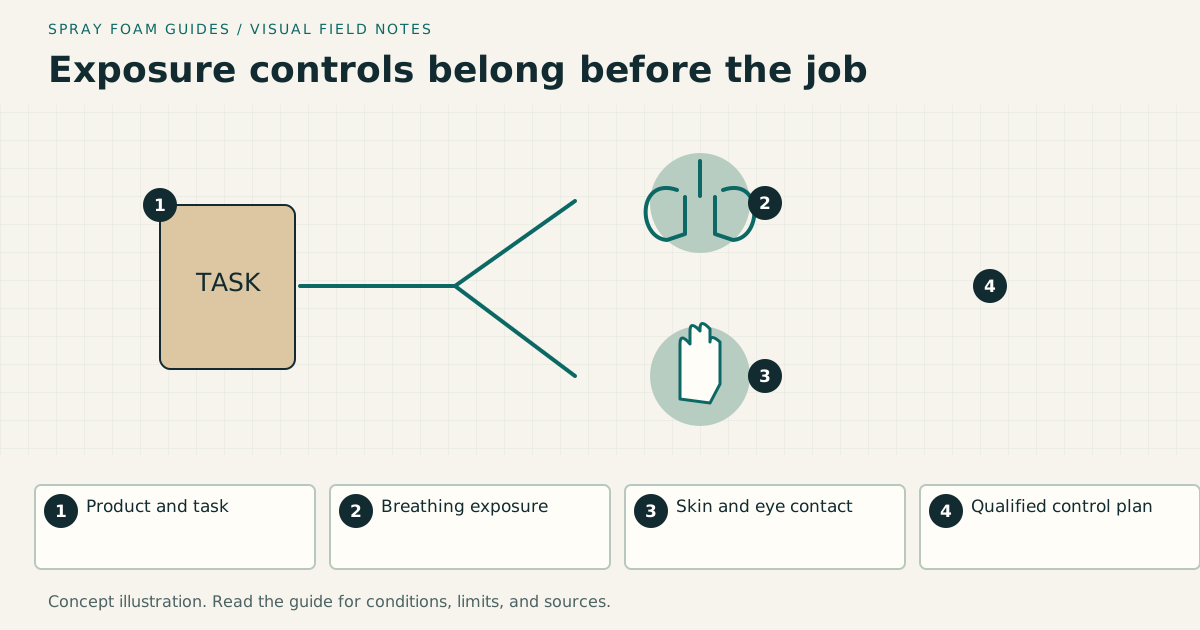
Personal protective equipment is not the first or only control. A safer work plan starts by reducing the job scope, selecting an appropriate product and method, isolating the work zone, preventing migration, and creating controlled ventilation. PPE then protects within that system.
The exact requirements depend on the product and task. Spraying, trimming incompletely cured foam, sanding, demolition, and heating polyurethane can present different hazards.
Respirator selection is not a shopping list
A mask that captures particles is not automatically suitable for vapor or mist exposure. In workplaces, required respiratory protection involves a hazard assessment and an appropriate program. OSHA’s respiratory-protection standard addresses selection, medical evaluation, tight-fitting respirator fit testing, training, maintenance, and other applicable requirements.
Do not infer a respirator from a generic online recommendation. Read the exact SDS and manufacturer guidance and use a competent occupational-safety professional when the selection is unclear.
Skin and eye protection matter
Spray mist and liquid components can reach eyes and uncovered skin. NIOSH’s isocyanates overview identifies both skin and respiratory exposure as possible routes to sensitization. A respirator does not address direct skin contact. Gloves, coveralls, hood, eye and face protection, and the way contaminated PPE is removed must follow the exact documentation. A small visible spray pattern does not mean exposure remains in that footprint.
Stop conditions
Do not proceed when the area cannot be isolated, safe outside exhaust cannot be created, occupants or pets cannot leave, HVAC migration cannot be controlled, the SDS is missing, required respiratory protection is unavailable, or the user has symptoms or a relevant medical concern requiring professional advice.
If symptoms occur
Leave the affected area and seek medical advice promptly for breathing problems or other health concerns after exposure; this is also the direction in EPA’s archived safety tips. For severe breathing difficulty or another emergency, call 911. Bring the product label and SDS if available without re-entering the affected area. Do not resume spraying to see whether the reaction happens again.
Sensitization changes the risk of later exposure
NIOSH’s archived isocyanates overview explains that exposure can cause sensitization and that sensitized people may react to later exposure. A history of using foam without obvious symptoms does not establish future tolerance. The overview is occupational health guidance, not a way to diagnose a homeowner from symptoms or a photograph.
If you have asthma, a prior reaction to polyurethane work, or a medical concern about the project, discuss the planned exposure with a qualified clinician before participating. Give the clinician the exact product documents and a description of the task. Do not rely on a contractor to decide whether a particular person can safely tolerate an exposure.
If a reaction occurs, medical assessment and building assessment answer different questions. A clinician evaluates the person; an exposure professional evaluates possible contaminants and pathways. Neither assessment should be replaced by guessing from the foam’s smell or color.
Think beyond the person holding the spray gun
Helpers, nearby trades, and people passing through the work zone also need to be accounted for. A crew member carrying equipment or trimming material may encounter different conditions from the applicator. The work plan should identify tasks and access rules for everyone who might enter, including the person maintaining ventilation after spraying ends.
For a homeowner, the key questions are logistical: which areas will be unavailable, where residents and pets will stay, who controls doors and signs, and what happens if another trade arrives unexpectedly? In a building with shared air paths, the property manager may need to coordinate spaces beyond the room receiving foam.
An attic hatch in a hallway illustrates the issue. Keeping residents out of the attic does not by itself resolve movement through the hatch, nearby returns, or temporary equipment routes. Require a site-specific plan that addresses those connections before the work is scheduled. See ventilation and re-occupancy.
Keep product hazards separate from marketing descriptions
Descriptions such as “low odor,” “green,” “water blown,” or “low pressure” do not replace hazard information for the actual formulation and task. Ask for both component SDSs when applicable and the installation instructions that govern the system. Read the hazards even when the material is sold in a consumer package.
A claim about the finished insulation is also different from a claim about application exposure. Product emissions documentation, where available, needs to be read within its testing conditions. It does not authorize an unprotected person to stand next to an active application.
Use the document-reading guide when a contractor supplies only a brochure or a certificate. Ask which document answers worker protection, which answers occupant restrictions, and which addresses the installed assembly.
Future work needs the installation record
Once the project is complete, retain a drawing showing where foam is installed. Share that information with trades before work that could disturb or heat it. A later repair may involve dust, hot work, or previously concealed material that was never evaluated during the original handoff.
Suspect foam should not be cut open as a homeowner diagnostic exercise. If texture, odor, or damage needs investigation, ask a qualified professional to define the inspection and any sampling method. Preserve labels and photographs from a safe location, and avoid handling contaminated items without guidance.
The professional-help guide can help assign roles. For unresolved indoor-air concerns, ask about an industrial hygienist or qualified indoor-environment professional with relevant chemical-exposure experience. An applicator’s familiarity with spray equipment does not automatically qualify them to select air-sampling methods or interpret a person’s symptoms.
Research & references
Sources used for this guide
- Isocyanates: OverviewOccupational Safety and Health Administration · government guidance · United States workplaces · accessed 2026-09-05
- Spray Polyurethane Foam Insulation: How to Use It More Safely (archived)U.S. Environmental Protection Agency · government guidance · United States · accessed 2026-09-05
- Ventilation Guidance for Spray Polyurethane Foam Application (archived)U.S. Environmental Protection Agency · government guidance · United States · accessed 2026-09-05
- 29 CFR 1910.134: Respiratory ProtectionOccupational Safety and Health Administration · official standard portal · United States workplaces; applicable industry and state-plan rules matter · accessed 2026-09-05
- Quick Safety Tips for Spray Polyurethane Foam Users (archived)U.S. Environmental Protection Agency · government guidance · United States; archived guidance · accessed 2026-09-05
- Isocyanates (archived)National Institute for Occupational Safety and Health (CDC) · government guidance · United States workplaces; archived occupational-health overview · accessed 2026-09-06
A citation supports a specific statement, not every possible assembly or local code interpretation.