Task-based exposure control
Spray Foam Work Zones, PPE, and Later Cutting or Removal
Application, uncured cleanup, cured trimming, sanding, demolition, and future hot work create different hazards. The exact product safety data and a task-specific exposure assessment control the work zone and protective equipment.
On this page
The short answer
Separate tasks and people, use exact current safety documents, control contaminants at the source, select PPE through a qualified program, and document when areas and systems may return to service.
This answer changes when…
- Exact product, component, cleaner, coating, dust, and decomposition hazards
- Task, quantity, pressure, duration, enclosure, ventilation, and nearby air pathways
- Worker training, respirator program, fit testing, protective clothing, eye and skin protection
- Occupants, other trades, HVAC, ignition sources, surfaces, waste, and emergency response
- Release criteria, postwork inspection, later cutting, hot work, repair, and owner notification
Dotted terms have plain-language definitions. Browse the glossary ↗
Divide the job by task and material state
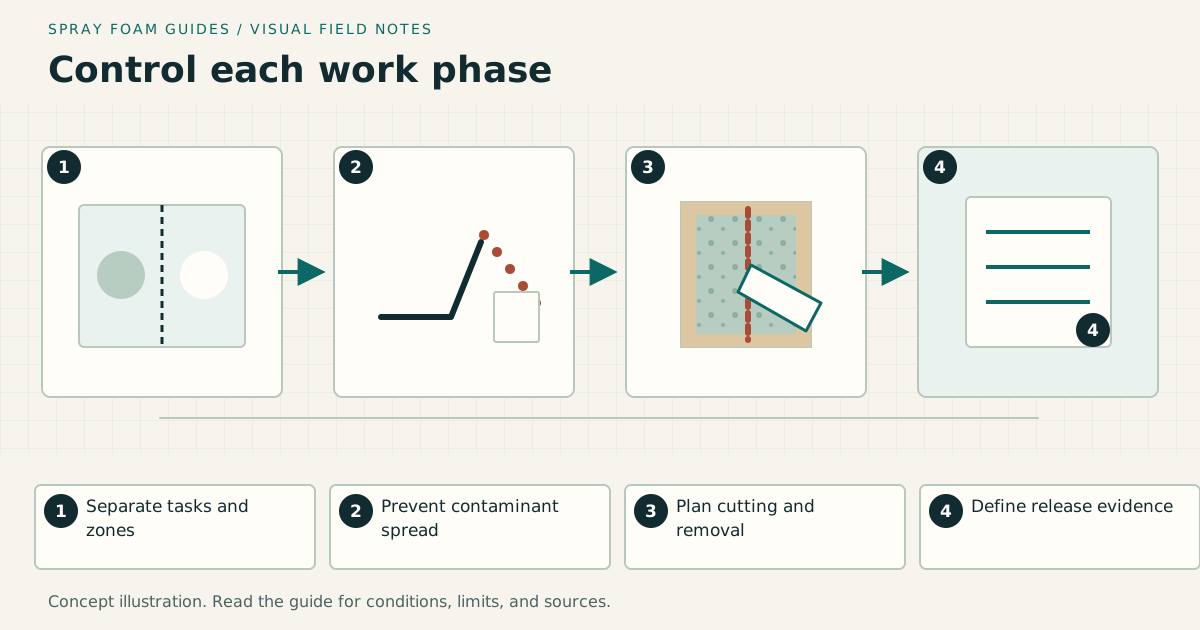
Do not write one PPE line for an entire project. Receiving and storage, setup, spraying, can or drum changes, uncured cleanup, trimming, sanding, coating, removal, and later hot work can expose workers through different routes. Create a task row for each phase.
OSHA’s weather insulating PPE guidance and respirator requirements support a hazard-assessment approach. The exact product safety data and application instructions remain essential. This guide cannot prescribe a universal respirator, glove, suit, ventilation rate, or re-entry time.
Establish the controlled zone
Map occupied rooms, work rooms, adjacent units, attics, crawl spaces, shafts, duct systems, return grilles, air intakes, elevators, stairs, and exits. Define physical isolation, negative or directed airflow where designed, exhaust discharge, access control, signage, communication, and monitoring. Protect people outside the spray room from contaminant migration.
| Task | Main control questions | Release evidence |
|---|---|---|
| Spraying or two-component application | Aerosol and vapor containment, ventilation, respiratory and skin protection | Exact system procedure and project release plan |
| Can or container change | Residual pressure, uncured chemicals, spills, connector cleaning | Closed transfer and decontamination record |
| Uncured cleanup | Solvent, skin or eye contact, contaminated tools and waste | Surface and waste handling under SDS |
| Cured trimming | Particles, hidden services, tools, collection | Inspection and controlled debris cleanup |
| Sanding or grinding | Fine dust and broad spread | Source capture and task exposure assessment |
| Removal or hot work | Unknown cure, dust, decomposition, concealed fire | Specialized plan and fire or exposure controls |
PPE follows the hazard assessment
Engineering and work-practice controls come first. A respirator program may require medical evaluation, fit testing, training, cartridge or supplied-air selection, change schedules, inspection, cleaning, and records. Gloves and clothing need chemical and task compatibility. Eye and face protection depends on splash, aerosol, particle, and tool hazards.
Do not send an untrained worker into a tight attic or crawl space because protective equipment is available. Heat stress, limited entry and escape, lighting, electrical hazards, falls, contamination, and communication may make the space a professional scope.
Protect the building’s air systems
Coordinate HVAC shutdown, isolation, cleaning, and return to service with the mechanical plan. An air handler can spread aerosol or odor beyond the work area. Exhaust should not discharge near outdoor-air intakes, doors, windows, neighbors, or workers. Temporary application ventilation does not replace permanent building ventilation.
Later work needs a foam-aware permit
The owner record should identify where foam is present behind finishes, against roof decks, around services, and within panels. Anyone cutting, grinding, soldering, welding, or applying heat needs that information. Heated foam can create hazardous decomposition products and concealed fire conditions. Use an appropriate hot-work and fire-control process.
Removal can expose dust, old substrate, biological contamination, asbestos-containing material, lead coatings, or damaged services. Investigate before disturbance. Do not use a generic cured-foam statement to clear every demolition task.
Project control sequence
- Inventory products and obtain current safety documents.
- Break the work into tasks, materials, tools, and duration.
- Assess inhalation, skin, eye, fire, heat, fall, and confined-access hazards.
- Design isolation, ventilation, access, decontamination, and emergency response.
- Select and document worker training and PPE through the responsible program.
- Protect occupants, other trades, HVAC, surfaces, and neighboring property.
- Inspect cleanup and apply the product-specific release process.
- Record concealed foam and instructions for later disturbance.
Stop work for symptoms, loss of containment, ventilation failure, spill, fire, uncontrolled overspray, unprotected entry, or a task outside the assessed scope. Follow emergency information in the safety data and obtain medical or emergency help as appropriate. A quiet room and absent odor are observations, not occupational or occupancy clearance.
Research & references
Sources used for this guide
- Safer Workplace Practices for Spray Polyurethane Foam Installation (archived)U.S. Environmental Protection Agency · government guidance · United States; archived guidance · accessed 2026-09-05
- Potential Chemical Exposures From Spray Polyurethane Foam (archived)U.S. Environmental Protection Agency · government guidance · United States; archived guidance · accessed 2026-09-05
- Weather Insulating and Personal Protective EquipmentOccupational Safety and Health Administration · government guidance · United States workplaces; task hazard and employer-control context, not a universal PPE prescription for an exact product · accessed 2026-09-09
- 29 CFR 1910.134: Respiratory ProtectionOccupational Safety and Health Administration · official standard portal · United States workplaces; applicable industry and state-plan rules matter · accessed 2026-09-05
- Isocyanates: OverviewOccupational Safety and Health Administration · government guidance · United States workplaces · accessed 2026-09-05
A citation supports a specific statement, not every possible assembly or local code interpretation.