House systems
Air Sealing, Ventilation, and Combustion Appliances: Check the Whole House
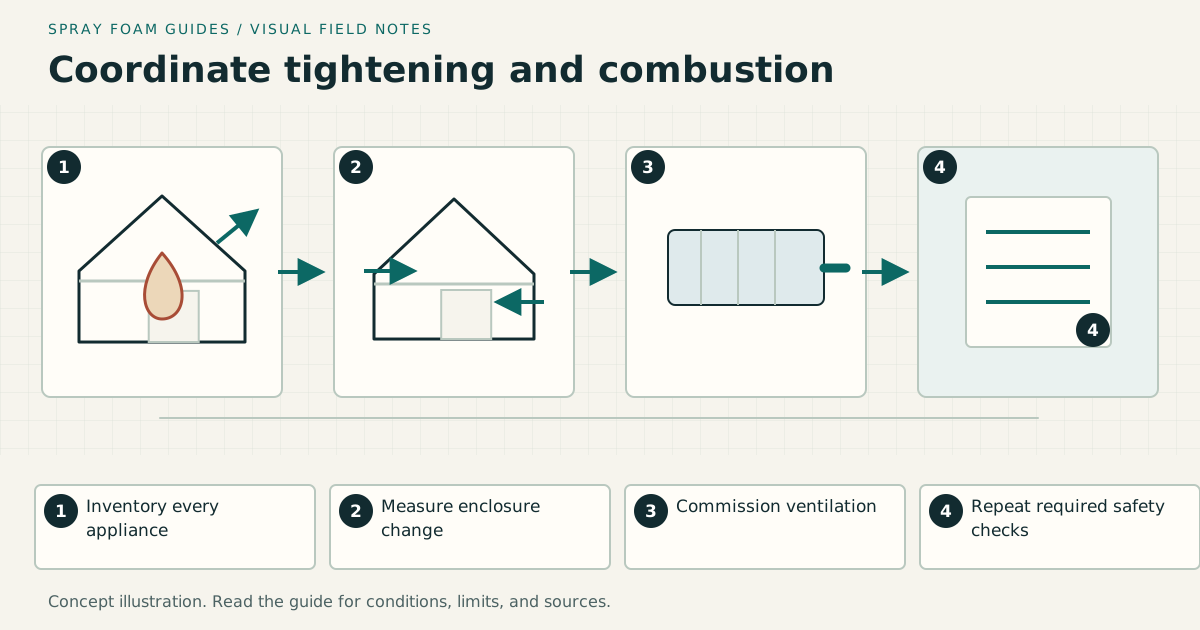
Air sealing changes how outdoor air, exhaust, and combustion air move through a building. Inventory appliances and pressure-producing equipment before work, then test and commission the completed system.
On this page
The short answer
Have the applicable combustion and ventilation work defined by qualified professionals before tightening. Repair unsafe equipment, preserve required air and clearances, commission ventilation, and document postwork tests.
This answer changes when…
- Fuel type, appliance type, venting, location, condition, and manufacturer instructions
- Range hoods, bath fans, dryers, fireplaces, central vacuums, and other exhaust
- Existing and required outdoor air, makeup air, transfer paths, and whole-building ventilation
- Garage, attic, crawl-space, basement, and mechanical-room pressure relationships
- Prework assessment, work-zone controls, postwork testing, alarms, and owner operation
Dotted terms have plain-language definitions. Browse the glossary ↗
Tightening changes air paths
An enclosure retrofit can reduce uncontrolled outdoor air, alter pressure relationships, and change how exhaust devices interact with fuel-burning appliances. The project therefore begins with an appliance and ventilation inventory, not with a target number of foam cans.
PNNL’s pre-retrofit combustion assessment provides a planning path for existing equipment. Combustion appliance zone testing is a defined professional procedure, not a homeowner smell or flame-color check.
Inventory every pressure source
Record furnaces, boilers, water heaters, fireplaces, stoves, space heaters, ovens, and other fuel-burning equipment. For each, note fuel, venting type, location, combustion-air provisions, age, condition, service record, and instructions. Add dryers, range hoods, bath fans, whole-house fans, central vacuums, air handlers, and attached-garage connections.
| Condition | Why air sealing matters | Next action |
|---|---|---|
| Natural-draft appliance inside the work zone | Depressurization can affect venting | Qualified assessment and defined test protocol |
| Direct-vent or sealed-combustion equipment | More isolated, but installation and terminations still matter | Verify exact instructions and condition |
| Large exhaust device | Makeup air and pressure can change | Mechanical design and commissioning |
| Fireplace or solid-fuel appliance | Chimney, draft, clearances, and room air interact | Appliance and chimney review |
| Ducts outside enclosure | Leakage can pressurize or depressurize zones | Duct test and repair plan |
| Garage connection | Pollutants can move into occupied space | Seal boundary and evaluate pressures |
Ventilation is a designed system
Whole-building ventilation, local exhaust, and source capture serve different jobs. A bath fan cannot automatically satisfy the complete outdoor-air plan, and a window-opening habit is not commissioning. Identify the applicable standard or code, design airflow, controls, distribution, filtration where relevant, and maintenance access.
After air sealing, measure delivered airflow using the accepted method. Verify controls, labels, intake and exhaust termination, noise, and owner understanding. A system that is routinely switched off does not deliver its design intent.
Foam work adds a temporary ventilation problem
Application ventilation and occupancy restrictions come from the exact product and project plan. They are separate from permanent building ventilation. Isolate air handlers and ducts from contaminants under a written method, and return equipment to service only through the approved sequence. Odor is not a clearance instrument.
Required project stages
- Inventory appliances, vents, chimneys, exhaust, ducts, and ventilation.
- Identify the proposed air boundary and anticipated tightening scope.
- Have existing defects and combustion concerns assessed and repaired.
- Design required ventilation, makeup air, and pressure controls.
- Establish application work zones and temporary ventilation.
- Perform air sealing without blocking vents, drains, reliefs, or required air.
- Repeat leakage, combustion, pressure, and ventilation checks under the defined protocols.
- Install and verify required alarms and deliver operating instructions.
Stop when an appliance is damaged, spilling, unvented, unidentified, or missing instructions; when a chimney or vent is compromised; when required combustion or makeup air may be blocked; or when the responsible professional has not defined postwork acceptance. Symptoms, alarms, soot, or unusual odors call for immediate occupant safety action and qualified evaluation, not additional sealing.
The handoff should include the appliance inventory, baseline findings, repairs, enclosure tests, mechanical design, delivered-air measurements, combustion test record, work-zone release documentation, alarm information, and maintenance schedule. This record connects the insulation job to the building people actually operate.
Research & references
Sources used for this guide
- Pre-Retrofit Assessment of Combustion AppliancesDOE Building America Solution Center · government guidance · United States; pre- and post-retrofit professional assessment sequence, not an appliance clearance · accessed 2026-09-09
- Combustion Appliance Zone TestingDOE Building America Solution Center · government guidance · United States; qualified combustion-safety testing context, not a homeowner test procedure or universal pass threshold · accessed 2026-09-09
- Enclosure Leakage TestDOE Building America Solution Center · government guidance · United States; blower-door measurement and diagnostic planning, with program protocol, combustion preparation, and acceptance limits verified for the project · accessed 2026-09-09
- Spray Polyurethane Foam Insulation: How to Use It More Safely (archived)U.S. Environmental Protection Agency · government guidance · United States · accessed 2026-09-05
A citation supports a specific statement, not every possible assembly or local code interpretation.