Control-layer map
Air Barrier vs Vapor Retarder: Different Jobs
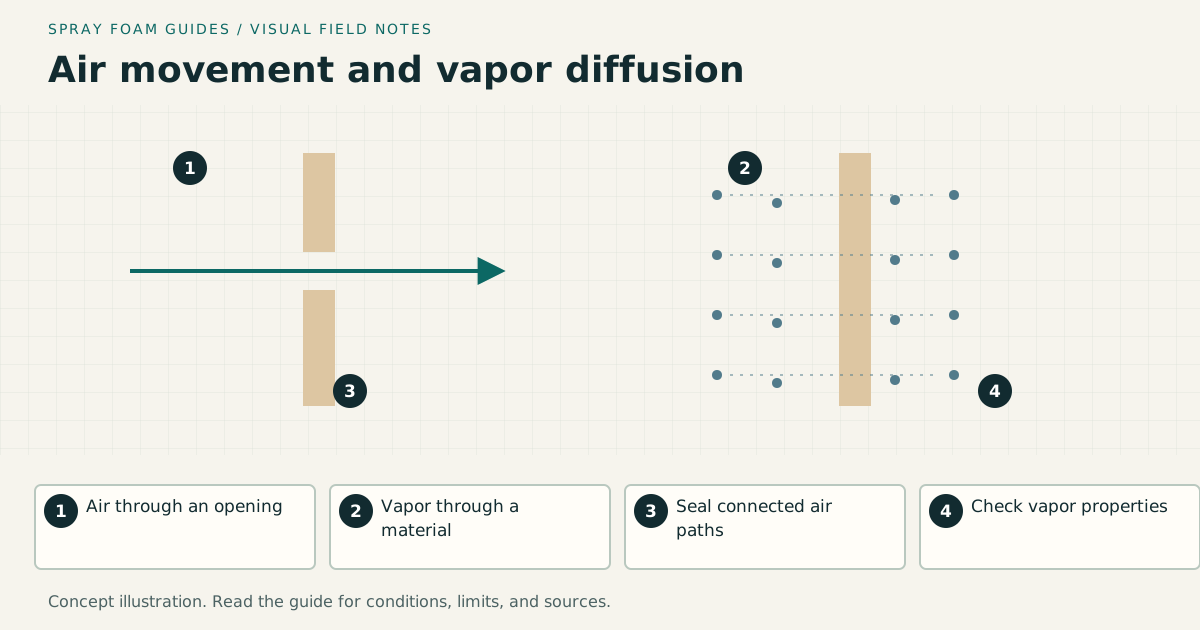
An air barrier limits airflow through the enclosure. A vapor retarder limits vapor diffusion. Bulk-water control drains rain and leaks. Thermal insulation resists heat flow. One material may perform more than one role, but the roles remain distinct.
On this page
The short answer
Do not call a material a vapor barrier simply because it blocks drafts, and do not expect vapor control to stop air-carried moisture. Draw all four control layers through the complete assembly and resolve gaps, transitions, penetrations, and drying direction.
This answer changes when…
- Indoor and outdoor temperature and humidity
- The location and continuity of the primary air-control layer
- Existing interior and exterior vapor-resistant materials
- Rain, ground water, drainage, and capillary control
- Mechanical ventilation and combustion equipment after air tightening
Dotted terms have plain-language definitions. Browse the glossary ↗
Four control layers
- Bulk-water control sheds and drains rain, groundwater, and plumbing leaks.
- Air control limits uncontrolled airflow across the enclosure.
- Vapor control manages diffusion through materials.
- Thermal control limits heat flow.
Their order and continuity matter. A wall can have high R-value and still fail because rain reaches vulnerable materials. It can have low vapor permeance and still receive moisture through air leakage. It can be airtight and create combustion or ventilation problems if the house is not evaluated as a system.
Why air carries so much moisture
Air-pressure differences drive airflow through cracks, penetrations, chases, and transitions. If the air reaches a surface colder than its dew point, water can condense. Sealing that flow path can be more important than adding insulation alone. This can involve indoor air escaping in winter or humid outdoor air entering an air-conditioned building.
A durable air barrier must be continuous. Spray foam may help connect irregular surfaces, but transitions to wood, masonry, membranes, windows, roof edges, and penetrations still need details that tolerate movement and remain inspectable.
Vapor control is product- and thickness-specific
Vapor permeance depends on the exact foam and installed thickness. “Closed cell in one pass” is not a reliable design specification. Use the technical data sheet and the assembly’s intended drying direction.
Diffusion is driven by a difference in water-vapor pressure across a material. It does not require air to leak through a hole. PNNL’s moisture-metrics explanation distinguishes vapor pressure from relative humidity. Two humidity percentages taken at different temperatures do not, by themselves, show which way vapor will move. Record temperature with humidity when assessing that question.
Adding a low-permeance vapor retarder between other vapor-resistant layers can limit drying. That may be acceptable in a designed assembly, or it may trap incidental moisture. The answer depends on climate, indoor humidity, exterior layers, and water exposure.
Air and vapor control at a wall outlet
A vapor-retarding finish can still have an air leak around an electrical box. Conversely, an airtight, vapor-open membrane can limit that airflow while allowing diffusion through its material. The DOE control-layer explainer distinguishes those transport paths.
Write “air control” and “vapor control” as separate lines in the project scope. If one material serves both, attach evidence for both functions at the proposed thickness and detail.
The same distinction applies to foam. A patch bonded to the center of a sheathing panel does not establish a continuous air barrier around the panel’s perimeter. Nor does a thick area establish the vapor behavior of a nearby thin area. Identify the intended control layer on a drawing and connect it through every edge and transition.
Do not use “the wall needs to breathe” as a specification. Ask whether the concern is drying by diffusion, outdoor-air ventilation for occupants, drainage of rainwater, or leakage through cracks. Those concerns lead to different details, and the phrase can hide disagreement about which problem is being solved.
Follow one wall from outside to inside
Consider a wall with cladding, a drainage space, a water-resistive layer, sheathing, insulated framing, and an interior finish. First identify what sheds rain and where any water behind the cladding exits. Next identify which layer is intended to resist airflow and how it connects to the windows and adjoining floors. Then review how the complete wall manages heat flow and vapor movement.
Changing the cavity insulation can affect those last two functions without fixing the first two. If window flashing directs water into the wall, an interior foam upgrade leaves that defect in place. If the air-control layer stops at the floor line, isolated cavity fills leave the transition unresolved.
For existing work, draw the layers that are known and mark unknown layers as unknown. A previous renovation may have introduced a membrane, coating, or insulation that is absent from the original plans. Selective investigation by a qualified professional may be needed before specifying another layer. See the exterior-wall guide for preparation questions.
Why season and indoor use matter
Temperature and moisture conditions change through the year, and buildings differ in how they are operated. A house with sustained high indoor humidity presents a different moisture load from one with effective humidity control. Air-conditioned interiors can also change the direction in which drying or vapor movement occurs.
The practical question is whether the assembly has an appropriate moisture strategy for its climate and use. Avoid copying an interior polyethylene detail from a house in another region without reviewing the complete wall. Additional low-permeance layers should be a design decision with a stated purpose.
A basement renovation or enclosed pool room can introduce conditions that a generic wall detail does not address. Ask the designer what interior humidity assumptions were used and who will maintain them. If the answer depends on mechanical equipment, include that equipment and its operation in the project scope.
Turn the drawing into a coordination checklist
Assign responsibility for the wall-to-roof connection, rim joist, window perimeter, and service penetrations. These details often sit between trades. “The insulator will seal it” is incomplete when another contractor later cuts a duct through the layer.
Before concealment, compare the installed transitions with the drawing. A qualified energy professional may use appropriate air-leakage diagnostics to investigate continuity. Such testing does not measure vapor permeance or certify that the rain-control system is complete. Match each verification method to the function it can actually assess.
After substantial air sealing, review the planned ventilation and combustion-safety checks. DOE’s Consumer Guide to Air Sealing treats sealing as part of a home-efficiency approach, and the Building America checklist adds project safety considerations. Do not deliberately leave random enclosure holes as the ventilation strategy.
If foam is being proposed over wet sheathing or an unexplained stain, move to the moisture investigation guide before selecting permeance or thickness. A control-layer drawing is useful only when the materials it describes are suitable to cover.
Research & references
Sources used for this guide
- Home Air Sealing ChecklistDOE Building America Solution Center · government guidance · United States · accessed 2026-09-05
- Unvented Attic InsulationDOE Building America Solution Center · government guidance · United States · accessed 2026-09-05
- Building Enclosure: Air Barriers vs Vapor BarriersDOE Building Science Education · government guidance · United States; educational control-layer concepts · accessed 2026-09-05
- Consumer Guide to Air SealingU.S. Department of Energy · government guidance · United States; consumer guidance · accessed 2026-09-06
- Moisture MetricsDOE Building America Solution Center · government guidance · Moisture definitions and vapor-pressure transport; no generic design target inferred · accessed 2026-09-06
A citation supports a specific statement, not every possible assembly or local code interpretation.