Planning an insulation retrofit
Before Removing Existing Insulation: What to Keep and Check
Existing insulation does not need replacement simply because it is old. Its condition, possible contaminants, concealed services, and role in the proposed assembly determine what can stay. Establish those facts before anyone moves material, opens finishes, or commits to a whole-attic removal package.
On this page
The short answer
Retain suitable existing insulation where the assessment supports it, arrange targeted access where necessary, and resolve hazardous-material, moisture, pest, and electrical concerns before disturbance or concealment. Suspect vermiculite calls for EPA's no-disturbance precautions and qualified advice. Define the removal extent, restoration, waste handling, and completion evidence before approving the work.
This answer changes when…
- An insulation upgrade includes existing batts, loose fill, boards, or foam
- Material identity, underlying layers, or previous repairs are uncertain
- Water damage, pest evidence, or concealed electrical equipment may affect the work
- Air sealing or a new assembly requires access behind existing insulation or finishes
- Quotes disagree about retaining, partly removing, or replacing the existing material
Dotted terms have plain-language definitions. Browse the glossary ↗
Does old insulation have to come out?
Often, it can stay. ENERGY STAR’s attic upgrade guidance says existing insulation usually does not need removal when it is suitable for retention. It flags wet, moldy, smelly, or animal-contaminated material as concerns and calls for air sealing before adding insulation.
That is a starting point, not permission to cover an unidentified layer. Age alone does not decide the job. Neither does a photograph showing a clean-looking surface. The assessment must address the material, conditions beneath it, and the construction planned above or beside it.
Ask every bidder to answer the same question: What specific condition makes removal necessary in each proposed area? A useful answer identifies a defect, contamination concern, required access, or assembly change. “We always remove everything” leaves the reason unexplained.
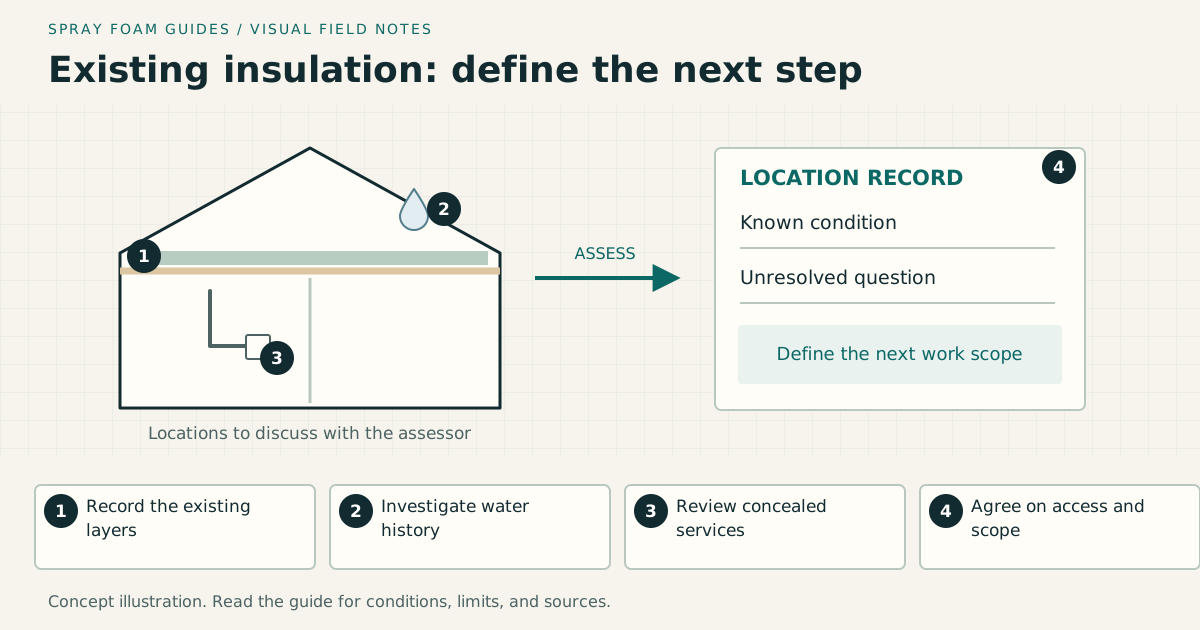
Record what is known without disturbing unknown material
Start with existing installation records, invoices, inspection reports, and accessible product labels. Note additions and repairs separately; different parts of one attic may have different histories.
Record observations only from an existing safe access position, without entering or disturbing suspect material. Do not rake insulation aside, pull up a sample, open a wall, or move debris to improve a photograph. Mark areas that cannot be seen as uninspected.
EPA’s homeowner asbestos guidance explains that appearance generally cannot establish whether a material contains asbestos. Professional assessment may be needed when renovation would disturb suspect materials. Taking your own samples is not recommended.
Use an annotated room or attic plan with separate notes for material identity, condition, and access. “Unidentified material beneath boarded storage area” is more useful than calling the entire attic safe or defective.
Compare the possible decisions
| Finding after assessment | Possible scope | Evidence needed before proceeding |
|---|---|---|
| Suitable insulation can remain in the selected assembly | Retain it and add only the work needed | Material and condition assessment, air-sealing access, and compatible assembly details |
| Sound material obstructs a necessary connection or inspection point | Defined professional access, with restoration or local replacement | Locations, disturbance precautions, and responsibility for closing the opening |
| Moisture damage or contamination affects an identified area | Correct the cause and determine the affected removal or repair extent | Specialist findings and completion criteria for that condition |
| Suspect vermiculite or another unresolved material lies in the work path | Defer disturbance while qualified advice establishes the next step | Hazard-specific assessment and a documented work plan |
| A new assembly requires a different substrate or boundary | Evaluate removal as part of that complete design | Existing-layer compatibility, access, drying, and protection details |
These are decisions to document with the project team. Several can apply in different locations. A partial view does not establish the limit of damage or contamination.
Treat suspect vermiculite differently
EPA’s vermiculite guidance advises treating vermiculite insulation as potentially asbestos-contaminated and leaving it undisturbed. Further testing is not necessary to take those precautions, and testing can produce misleading results depending on the method. EPA also advises against opening walls to look for it.
If records or observations raise this concern, stop the planned disturbance and get qualified asbestos advice. Do not move the material to reach an air leak or assume a new layer makes the work acceptable. An ordinary spray-foam installation is not an asbestos abatement plan.
Removal is not automatic. The planned renovation, condition, and ability to leave the material undisturbed matter. If removal is selected, EPA recommends a trained, accredited asbestos abatement contractor separate from the assessment company to avoid a conflict of interest.
Verify the applicable state and local requirements with the responsible professional. Do not accept a sales estimate as the hazardous-material assessment.
Resolve moisture and pest concerns before concealment
A stain records a water event; it does not tell you whether the leak is active or the material underneath is dry. Give the assessor the repair history, locations of recurring odors, and any reports of roof, plumbing, or exhaust problems.
EPA’s mold guidance places moisture correction at the center of remediation. Porous materials may need disposal, and investigating hidden mold can release contamination when materials are disturbed. Have an experienced professional determine the investigation and affected-material scope. A dry-looking surface or absent odor alone does not establish that the underlying problem is resolved.
Do not use added insulation or foam to conceal unresolved growth or dampness. The moisture and drying guide explains why the water source and the assembly’s drying route need separate attention.
Droppings, nests, damaged material, or repeated pest activity require a pest and contamination assessment. CDC’s rodent guidance warns against sweeping or vacuuming rodent waste and nesting material because contamination can become airborne. It identifies additional precautions for heavy infestations and professional help when rodents have accessed heating or cooling ducts.
Ask who addresses the infestation, entry routes, affected insulation, and any involved ducts. Do not turn a routine insulation-removal crew’s arrival into an improvised cleanup. Evidence in one corner does not by itself define the condition of every cavity.
Check wiring, fixtures, and heat sources
Ask a qualified electrician to evaluate suspect or damaged wiring and any possible active knob-and-tube system before insulation work affects it. PNNL’s roof and attic assessment identifies active knob-and-tube wiring as a condition requiring correction before attic work. A disconnected-looking wire is not proof that a circuit is inactive.
Recessed lights need their own check. DOE’s fixture guidance distinguishes insulation-contact ratings from airtightness. Have the contractor identify the actual fixture, driver or transformer, and permitted covering or clearance arrangement. Changing a bulb to an LED does not establish the housing’s rating.
Map flues, chimneys, junction boxes, and equipment access. Insulation and air sealing must preserve required clearances and serviceability. Generic expanding foam does not become an approved high-temperature or firestop detail because it fills the opening. Use the fire-protection guide to distinguish covering requirements from product claims.
Include finishes and the future assembly
Removing insulation and opening an old painted ceiling are different disturbance scopes. If access involves painted surfaces in a pre-1978 home, have the contractor address potential lead-based paint before cutting or demolition. EPA recommends lead-safe certified contractors for this renovation work. This concern arises from the affected finishes; it is not a claim that every old insulation product contains lead.
Boarded attic floors also deserve attention. PNNL’s assessment cautions that boards or sheathing may have a structural role. Obtain qualified advice before removal and include necessary structural support and restoration.
Then identify where the completed insulation boundary will be. Adding attic-floor insulation and moving the boundary to the roofline are different projects, as the attic guide explains. Existing facings, boards, and other layers need review within that design.
For a proposed foam application, retention is also a substrate question. Have the installer document whether the exact product permits the proposed receiving surface and how it will be prepared and checked. See application conditions and substrate readiness before accepting a promise to spray over whatever is present.
A useful way to compare two bids
Consider a hypothetical homeowner upgrading a vented attic. The records identify earlier batt installation. A boarded storage area conceals part of the floor, there is a stain below an old roof repair, and several recessed fixtures have not been identified.
Bid A offers whole-attic removal, air sealing, and new insulation. It excludes electrical work and describes cleanup only as “included.” Bid B proposes retaining suitable batts, with assessment and separately described access around the storage area, stain, and fixtures.
Neither description is ready to approve. Ask both bidders to revise around the same findings:
- Identify which areas have been assessed and which remain concealed.
- Resolve the stain and fixture questions before setting the insulation scope.
- Define approved access beneath the boards and who restores the floor.
- Explain any removal proposed outside those areas.
- Price the agreed work and state how additional findings change the scope.
The resulting comparison might support retention, targeted removal, or a larger project. The example does not predetermine the answer. It shows why a single removal line cannot substitute for an assessment. Use the contractor quote guide to compare the revised responsibilities and exclusions.
Put cleanup, waste, and verification in the contract
Name who establishes work zones and occupancy or access arrangements for each phase, protects the rest of the home, handles waste under applicable requirements, and restores disturbed finishes. Where access is restricted, specify task-specific return conditions and who confirms them. Specialist remediation needs its own work plan and completion evidence. EPA’s asbestos contracting guidance specifically addresses written scope, cleanup, handling, disposal, and documentation.
Ask these questions before scheduling:
- Who can stop the work if an unknown layer or new defect appears?
- Which areas remain uninspected, and how will that uncertainty be resolved?
- Who verifies repairs and required specialist work before new insulation conceals them?
- What documentation identifies retained material, removed areas, and new installation?
- Who restores access panels, finishes, and required protective assemblies?
- What permits, inspections, disposal records, or specialist reports apply to this job?
Schedule the verification point before covering the affected surfaces. Keep photographs linked to locations, repair records, applicable specialist findings, and the accepted insulation specification. A clean-looking final photograph cannot demonstrate hidden substrate condition or hazardous-material clearance.
The inspection and handover guide provides the next stage: confirming the agreed work and recording what remains inaccessible. Retaining useful insulation and paying for necessary removal both make sense when the evidence and responsibilities are clear.
Research & references
Sources used for this guide
- Well-Insulated and Sealed AtticENERGY STAR / U.S. Environmental Protection Agency · government guidance · United States; conditional retention and contractor planning, subject to material-specific hazards and the selected assembly · accessed 2026-09-06
- Protect Your Family from Asbestos-Contaminated Vermiculite InsulationU.S. Environmental Protection Agency · government guidance · United States; material-specific precautions and qualified advice, not a site finding or testing clearance · accessed 2026-09-06
- My attic has vermiculite insulation in it. Am I at risk? Should I take it out?U.S. Environmental Protection Agency · government guidance · United States; assessment and abatement role separation, not an individual exposure assessment · accessed 2026-09-06
- Protect Your Family from Exposures to AsbestosU.S. Environmental Protection Agency · government guidance · United States; homeowner planning and professional roles, with applicable state and local requirements verified separately · accessed 2026-09-06
- How to Clean Up After RodentsCenters for Disease Control and Prevention · government guidance · United States; disturbance precautions and contamination scope, not a site-specific cleanup procedure · accessed 2026-09-06
- A Brief Guide to Mold, Moisture and Your HomeU.S. Environmental Protection Agency · government guidance · United States · accessed 2026-09-05
- Lead-Safe Renovations for DIYersU.S. Environmental Protection Agency · government guidance · United States; residential renovation lead precautions · accessed 2026-09-06
- Pre-Retrofit Assessment of Attics, Ceilings, and RoofsU.S. Department of Energy / Pacific Northwest National Laboratory · government guidance · United States; existing-condition assessment, not site inspection or hazardous-material clearance · accessed 2026-09-06
- Air Sealing Recessed Light Fixtures Below Unconditioned SpaceU.S. Department of Energy / Pacific Northwest National Laboratory · government guidance · United States; fixture air sealing and insulation-contact distinctions, subject to actual listing and installation instructions · accessed 2026-09-06
A citation supports a specific statement, not every possible assembly or local code interpretation.