Moving enclosures
Spray Foam for Vans, Trailers, and RVs: Moisture, Movement, and Repair
A vehicle shell flexes, vibrates, gets repaired, contains dense wiring and equipment, and may collect water from both leaks and occupant moisture. Map those conditions before bonding insulation to the skin.
On this page
The short answer
Treat a van, trailer, or RV as a moving, serviceable system. Resolve legal status, leaks, corrosion, drainage, wiring, fuels, ventilation, weight, fire protection, and future access before selecting any spray product.
This answer changes when…
- Vehicle identity, use, alteration status, weight limits, and applicable rules
- Shell metal, factory coatings, corrosion, seams, drains, and leak history
- Wiring, batteries, fuel, exhaust, plumbing, windows, and service panels
- Occupant moisture, heating, cooling, ventilation, and condensation plan
- Adhesion, movement, fire behavior, odor, repair, and end-of-life access
Dotted terms have plain-language definitions. Browse the glossary ↗
A moving shell is not a small house
Vehicle ribs, thin skins, bonded panels, wiring channels, drains, windows, doors, and repair seams create a distinct assembly. Vibration and thermal cycling act on every bond. A house-wall detail does not become valid because it fits between two ribs.
Legal classification matters. A personal van conversion, manufactured RV, cargo trailer, and altered motor vehicle can follow different safety and documentation paths. NHTSA interpretations illustrate that vehicle alteration responsibilities depend on who changes what and when. Confirm the actual vehicle and work scope rather than using a generic “RV approved” assumption.
First expose the water story
Find roof penetrations, windows, marker lights, seams, doors, floor edges, wheel housings, and drains. Record active leaks, old stains, trapped debris, coating damage, and corrosion. Repair and verify from the exterior. Foam on the inside cannot rebuild a failed seam or show whether a leak returns.
| Condition | Why it matters | Required decision |
|---|---|---|
| Bare or coated metal | Adhesion and corrosion protection vary | Identify coating and compatible preparation |
| Rib or frame cavity | Geometry and thermal bridge remain | Decide whether the rib stays visible, insulated, or serviceable |
| Factory drain or weep path | Water needs an exit | Preserve it and document the route |
| Wire, connector, battery cable, or module | Heat and service access matter | Confirm compatibility and make access plan |
| Fuel line, exhaust, heater, or cooking appliance | Heat and combustion risks apply | Use equipment instructions and qualified review |
| Door, hatch, or body seam | Movement and replacement occur | Do not bridge without an accepted flexible detail |
Condensation begins with occupants and operation
People breathe, cook, dry clothes, and sometimes use combustion appliances in a very small volume. Outside temperatures change quickly across thin metal. Map where moisture is generated, how it is exhausted, and how replacement air enters. Include parked, driving, sleeping, and storage modes.
Insulation can warm interior surfaces and reduce some condensation risk, but it does not guarantee a dry cavity. Air can reach cold ribs or hidden metal through discontinuities. Water can also enter from outside. Provide inspection points at known leak-prone details instead of assuming a completely inaccessible bonded shell will remain dry forever.
Protect every system before spraying
Create a service drawing before anything is concealed. Show wire sizes and routes, junctions, fuses, battery equipment, plumbing, gas lines, fuel systems, drains, fasteners, structural members, crash-related components, and required labels. Use physical shields at no-spray locations. Tape alone may move or fail during application.
Do not encase connectors, valves, fasteners, drain channels, or modules that may need removal. Check exact foam compatibility with wire jackets, plastic pipes, coatings, adhesives, and any factory sound or corrosion treatment. “Closed-cell” is not a compatibility statement.
Weight and thickness need a real calculation
Calculate net area by zone, intended average thickness, stated in-place density for the exact product, waste allowance, and the weight of finish materials. Compare the completed conversion with the vehicle’s ratings and load distribution. A theoretical board-foot yield is not installed weight or usable coverage.
Make small mockups of representative metal and coating conditions when the system documents permit. Inspect adhesion and cure under the recorded conditions, but do not transfer the result to corroded, oily, damp, or differently coated areas.
Work-zone and occupancy planning
Application takes place in a compact enclosure connected to ducts, fabrics, and porous finishes. Follow the exact safety data and application manual for isolation, supplied ventilation, protective equipment, ignition control, cleanup, and access. The finished vehicle should not be released based on odor alone or a universal waiting period.
Sequence and handoff
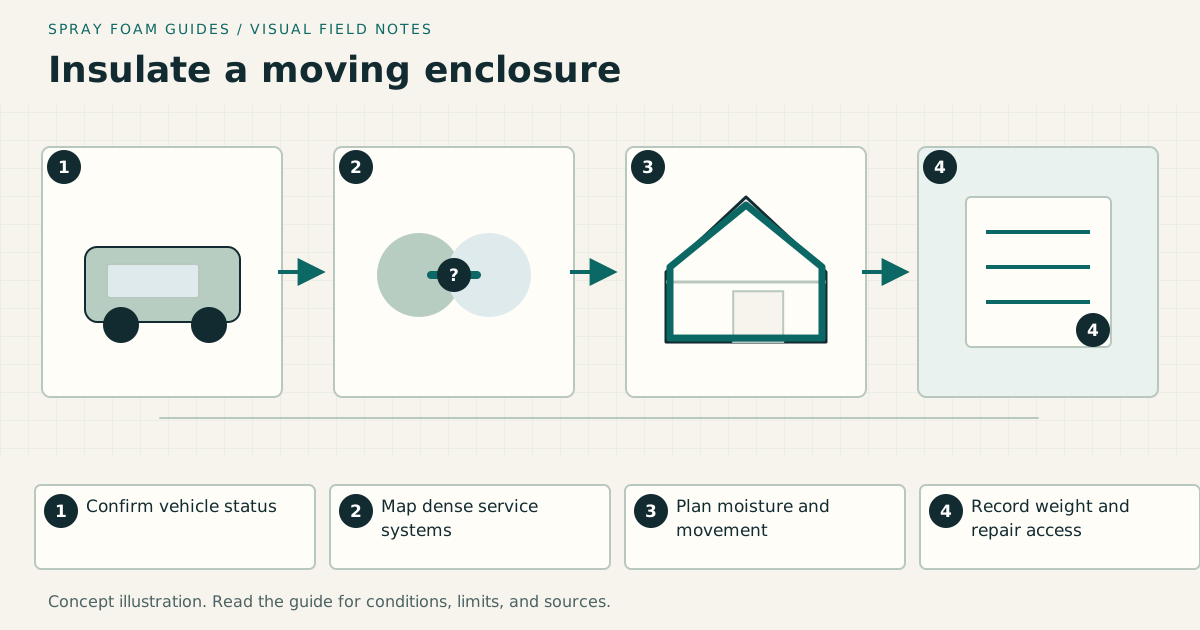
- Confirm vehicle classification, alteration responsibilities, and weight limits.
- Leak-test, repair seams, treat corrosion, and verify drains.
- Draw every hidden system and photograph each wall, roof, and floor bay.
- Define interior humidity and ventilation for every operating mode.
- Select a complete insulation and finish system with exact compatibility evidence.
- Mask and shield services, movement joints, labels, and repair points.
- Record conditions, batches, thickness, and observations by zone.
- Inspect before lining, then test every electrical, plumbing, ventilation, and appliance function.
- Weigh the completed vehicle where appropriate and deliver the service map.
Stop when there is active leakage, corrosion of uncertain extent, undocumented fuel or electrical work, a required drain or seam would be bridged, the substrate coating cannot be identified, or the finished protection and safe-use plan are incomplete. The repair map matters as much as the insulation map.
Research & references
Sources used for this guide
- Vehicle Alterer Certification InterpretationNational Highway Traffic Safety Administration · government guidance · United States motor-vehicle alteration context; older interpretation retained only to prevent assuming a house detail preserves vehicle certification · accessed 2026-09-09
- Spray Polyurethane Foam Insulation: How to Use It More Safely (archived)U.S. Environmental Protection Agency · government guidance · United States · accessed 2026-09-05
- Building Enclosure: Air Barriers vs Vapor BarriersDOE Building Science Education · government guidance · United States; educational control-layer concepts · accessed 2026-09-05
- Technical DocumentsSpray Polyurethane Foam Alliance · official standard portal · United States industry guidance index; confirms distinct technical scopes, while full document access, exact system evidence, code acceptance, and site design remain separate · accessed 2026-09-09
A citation supports a specific statement, not every possible assembly or local code interpretation.