Wet environments
Spray Foam Around Pools, Spas, and Water Features: Define the Wet Zone
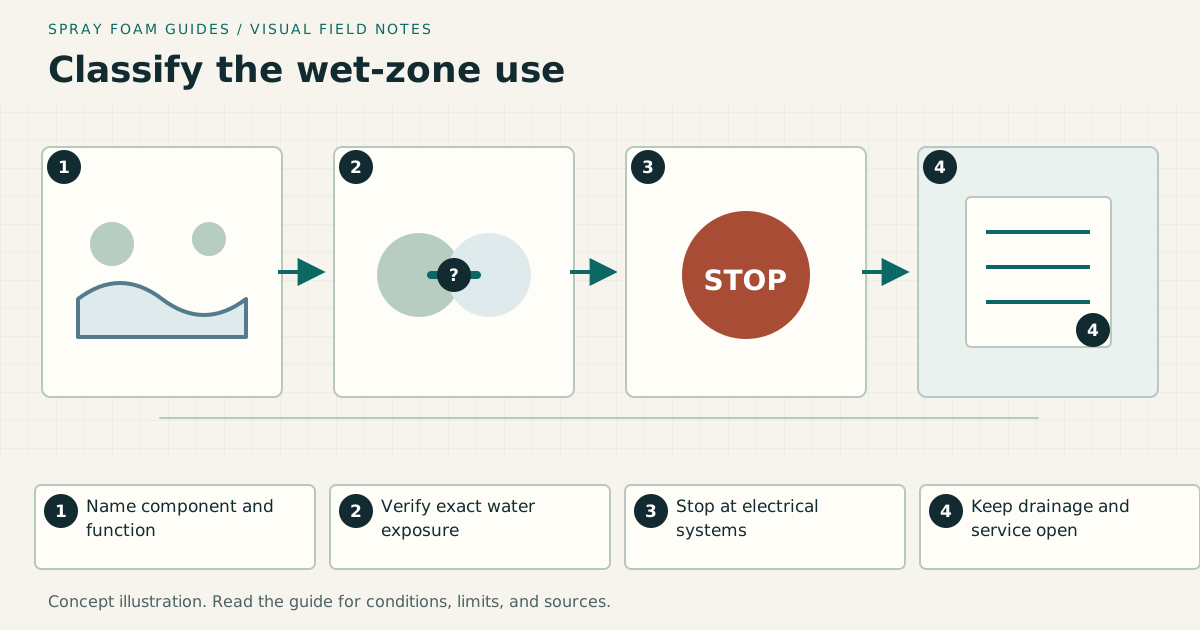
A decorative waterfall edge, spa cabinet, pool equipment room, pipe penetration, and pool shell have different exposure and safety requirements. Name the component and the water contact before selecting foam.
On this page
The short answer
Do not treat black color, closed cells, or water resistance as proof of immersion, waterproofing, structure, plumbing repair, or electrical safety. Keep the primary liner, shell, drainage, wiring, bonding, and service systems intact.
This answer changes when…
- Exact component, function, and whether water contact is incidental, splash, or immersion
- Liner, shell, waterproofing, drainage, plumbing, and structural support
- Chemicals, sunlight, temperature, freeze-thaw, movement, and maintenance access
- Electrical equipment, bonding, clearances, wet-location parts, and de-energization
- Exact product water, substrate, coating, wildlife, and exposure claims
Dotted terms have plain-language definitions. Browse the glossary ↗
“Around water” is not one exposure
Begin by naming the object: pool shell, spa shell, cabinet insulation, equipment-room wall, pipe opening, decorative rock, waterfall channel, liner edge, or landscaping void. Then name the intended job: thermal insulation, air sealing, limited filling, visual blending, water-flow shaping, support during assembly, or another documented use.
Products marketed for pond and stone work show why this distinction matters. Their claims are exact-product claims for named landscape uses. They do not convert ordinary foam into a pool liner, structural adhesive, pipe repair, or submerged building insulation. See the focused black foam guide for the color and landscape branch.
Sort the wet zone before work
| Zone | Primary system | Foam question |
|---|---|---|
| Pool or spa shell | Engineered shell and listed finish or liner | Is any foam specifically part of that system? |
| Decorative waterfall | Liner, stable rock support, and plumbing | Is the exact landscape product limited to filling or directing visible flow? |
| Spa cabinet | Manufacturer’s insulated, ventilated, and serviceable assembly | Will added foam affect equipment cooling, drainage, warranty, or access? |
| Equipment room | Building enclosure plus mechanical and electrical systems | Is the insulation protected and clear of service zones? |
| Pipe penetration | Sleeve, flashing, seal, and service detail | Does the closure manage movement and remain repairable? |
| Nearby exterior wall | Rain-screen and wall control layers | Is the wall detail independent from pool splash assumptions? |
Electricity controls the work boundary
Pools and spas combine water with pumps, heaters, lights, controls, and bonding systems. OSHA’s pool electrical eTool reinforces the significance of electrical hazards in these environments. Have the responsible electrical professional identify circuits, bonding conductors, junctions, wet-location equipment, clearances, and de-energization before foam or cleanup begins.
Do not cover a conductor, bonding connection, drain, motor ventilation opening, nameplate, union, valve, or service panel. Foam is not a substitute for a wet-location enclosure or a repair to damaged insulation on a wire.
Water management remains visible and repairable
Trace how rain, splash, leaks, and wash water drain. A landscape bead can redirect small surface flow only where its exact instructions allow. It should not block a designed weep path or create a concealed reservoir behind rock, a cabinet, or cladding.
Pool and spa water may include disinfectants, salts, oils, heat, and repeated wet-dry cycling. Ask for exact chemical, temperature, ultraviolet, immersion, and substrate evidence. “Water resistant” and “closed-cell” do not answer those questions.
Protect equipment operation
Spa and pool equipment needs cooling air, drainage, clearances, and access. Adding foam inside a cabinet can change all four. Obtain the equipment manufacturer’s written requirements and identify removable insulation or access panels. Keep labels, valves, unions, filters, sensors, and winterization points usable.
For an equipment-room enclosure, treat walls and roof as a normal building assembly with unusually important leakage and humidity sources. Repair plumbing leaks first. Exhaust or dehumidification must be sized for the actual space and operation by the responsible designer.
Installation and inspection plan
- Identify the exact component, primary system, and foam’s limited function.
- Isolate electrical and mechanical hazards using qualified trades.
- Repair shell, liner, plumbing, drainage, structure, and enclosure defects.
- Record water chemistry, heat, sunlight, movement, and expected service.
- Verify exact product claims and excluded uses in current documents.
- Protect drains, equipment, labels, conductors, and service points.
- Apply only within the documented geometry and conditions.
- Inspect flow and drainage before hiding edges or returning equipment to service.
- Give the owner a map and removal method for later repair.
Stop if the work depends on foam to waterproof a shell, repair pressure piping, support unstable rock, insulate energized equipment, or bridge an unknown joint. Also stop when immersion, chemical exposure, wildlife or plant suitability, heat, sunlight, or electrical conditions exceed the evidence available for the named product.
The record should include the component, product, batch, water-contact type, substrate preparation, electrical isolation, before-and-after photographs, drainage check, and service-access drawing. This makes a small decorative use distinguishable from a safety-critical pool system.
Research & references
Sources used for this guide
- Subpart S Electrical Standard eTool: PoolsOccupational Safety and Health Administration · government guidance · United States workplaces; electrical hazard context around water, not residential pool design or foam-product approval · accessed 2026-09-09
- GREAT STUFF Pond & Stone Insulating Foam SealantDuPont · manufacturer document · United States; exact black landscape-foam example for decorative water features, not a building-envelope waterproofing or insulation approval · accessed 2026-09-07
- Landscape Adhesive FoamDAP Global · manufacturer document · United States; exact black landscape adhesive and filler example for decorative rockwork and water features, not a structural adhesive, liner repair, potable-water approval, or general building-envelope waterproofing system · accessed 2026-09-08
- Spray Polyurethane Foam Insulation: How to Use It More Safely (archived)U.S. Environmental Protection Agency · government guidance · United States · accessed 2026-09-05
A citation supports a specific statement, not every possible assembly or local code interpretation.