Compact structures
Mobile Homes, Tiny Houses, and Shipping Containers: Three Different Systems
Manufactured homes, code-built tiny houses, movable tiny houses, and freight containers differ in regulation, structure, transport, moisture, utilities, and repair. Classify the project before borrowing any insulation detail.
On this page
The short answer
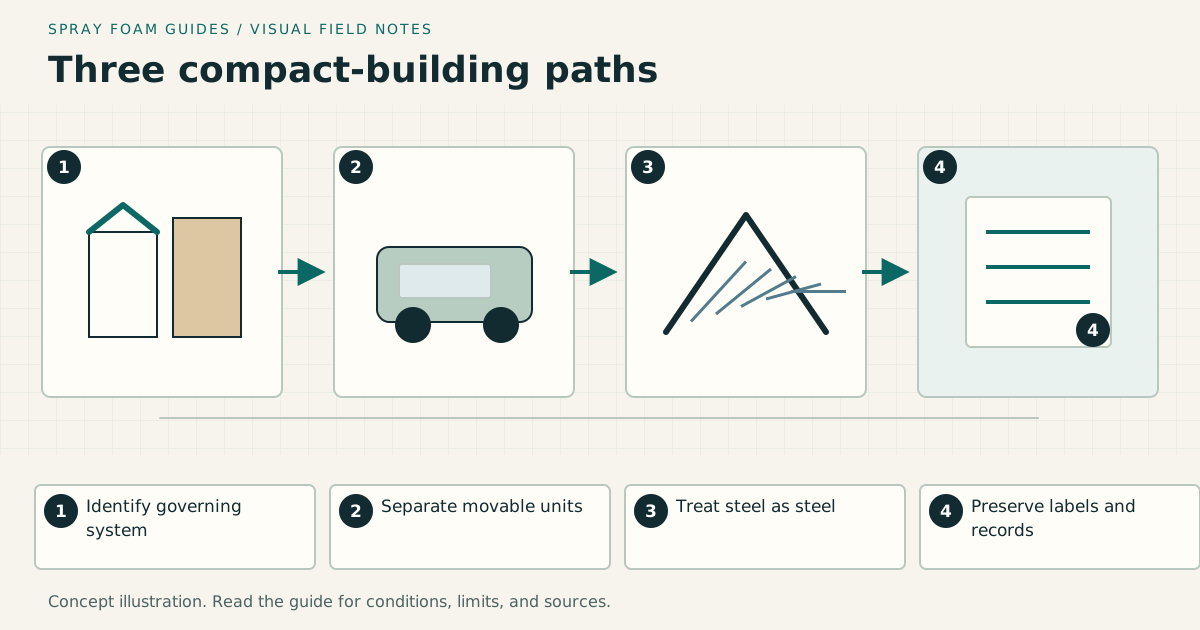
Do not use one compact-building recipe. Preserve labels and approvals, verify structural and transport changes, repair water and corrosion, model condensation risk, and keep utilities and safety systems serviceable.
This answer changes when…
- Legal and construction classification, jurisdiction, labels, and alteration scope
- Structure, skins, transport loads, corrosion, drainage, and water entry
- Thin framing, thermal bridges, utilities, equipment, and access panels
- Occupancy density, indoor moisture, ventilation, heating, and cooling
- Exact insulation, coating, attachment, fire-protection, and inspection documents
Dotted terms have plain-language definitions. Browse the glossary ↗
Identify the thing before designing the enclosure
“Mobile home,” “tiny home,” and “container home” describe very different paths. A manufactured home carries federal construction and certification information. A site-built tiny house may use an adopted residential-code appendix. A tiny house on wheels may be treated as a vehicle or recreational unit. A shipping container begins as freight equipment and becomes a building only through a defined design and approval process.
HUD’s manufactured-home resources and label guidance make identity and records central. The ICC tiny-house appendix overview shows that local adoption still matters. Do not remove labels or cover data plates needed to identify an existing unit.
Keep the three branches separate
| Project | First governing question | Enclosure concern that follows |
|---|---|---|
| Manufactured home | What do the data plate, certification label, construction records, and alteration rules require? | Underbelly, roof, wall, utilities, transport design, repair methods |
| Tiny house on a foundation | Which locally adopted building code and tiny-house provisions apply? | Egress, lofts, ventilation, fire protection, conventional control layers |
| Movable tiny house | Is it a vehicle, RV, manufactured structure, or another regulated unit? | Weight, movement, fuels, road vibration, labels, serviceability |
| Freight container conversion | Who verifies structural cuts, reinforcement, coatings, and building use? | Steel thermal bridges, condensation, corrosion, drainage, attachment |
The branches can share principles, such as keeping water out and controlling indoor moisture. They cannot share an unverified wall section or code claim.
Manufactured homes require record-first work
Locate the data plate and certification labels when present. Record manufacturer, serial information, date, roof zone, wind zone, thermal information, and known alterations without interpreting them beyond the document. Obtain the accepted repair or alteration path before cutting skins, filling floor cavities, covering wiring, or changing ventilation.
The underside may combine a floor assembly, utilities, ducts, insulation, and a protective belly material. A puncture repair is not simply an opportunity to fill the entire hidden volume. Investigate leakage, plumbing, pests, displaced insulation, duct condition, and required access. Use a compatible repair system for the enclosure skin.
Tiny houses magnify moisture and service conflicts
A small occupied volume can receive a high moisture load from breathing, cooking, and bathing. A loft, compact mechanical area, and closely spaced utilities leave little room for error. Define exhaust, whole-space ventilation, combustion, heating, and cooling before tightening the shell.
Draw the continuous air, thermal, rain, and vapor-control layers. Mark egress openings, electrical equipment, plumbing, drains, and appliances. Thin assemblies need a project-specific condensation check rather than a generic statement that one foam type solves vapor control.
Container walls are corrugated steel assemblies
Inspect roof depressions, welded patches, door seals, corner posts, rails, floor condition, coatings, and corrosion. Structural openings for doors and windows require engineered reinforcement where applicable. Do not bond foam over active corrosion, water entry, unknown contamination, or a surface whose coating cannot support the system.
Steel corrugations and frames conduct heat around cavity insulation. Interior finishes, furring, penetrations, and exterior shading all affect surface temperatures. Preserve drainage and inspection at lower rails and vulnerable seams. Record how damaged panels or coatings will be repaired later.
One project worksheet
- Write the legal and physical identity of the unit.
- Collect labels, plans, manufacturer documents, alteration records, and jurisdiction decisions.
- Inspect structure, skins, water entry, corrosion, pests, and prior repairs.
- Inventory utilities, fuels, exhaust, ventilation, appliances, and access needs.
- Draw control layers at roof, wall, floor, openings, and penetrations.
- Calculate space, weight, attachment, finish, and service consequences.
- Select exact systems and obtain required design or approval.
- Photograph concealed work and verify every utility before occupancy.
Stop conditions
Stop before spraying if the unit’s classification is unresolved, federal or local labels would be obscured, structural cuts lack review, the shell leaks or corrodes, transport or weight effects are unknown, utilities cannot be traced, combustion and ventilation are unresolved, or the selected product lacks evidence for the actual substrate and finish.
The final record should allow an inspector or repair technician to identify the unit, understand the alteration, find every service, and know where bonded foam is present. A compact space makes that record more valuable, not less.
Research & references
Sources used for this guide
- Manufactured Housing Homeowner ResourcesU.S. Department of Housing and Urban Development · government guidance · United States federally regulated manufactured homes; alteration, label, agency, and warranty context, not a repair approval · accessed 2026-09-09
- Manufactured Housing HUD LabelsU.S. Department of Housing and Urban Development · government guidance · United States; certification-label and data-plate context, not evidence that a later alteration preserves compliance · accessed 2026-09-09
- Adoptable Appendices in the IRC for Cob Construction and Tiny HousesInternational Code Council · official standard portal · 2021 model-code appendix context; provisions apply only when adopted and do not govern vehicles or HUD manufactured homes by analogy · accessed 2026-09-09
- Vehicle Alterer Certification InterpretationNational Highway Traffic Safety Administration · government guidance · United States motor-vehicle alteration context; older interpretation retained only to prevent assuming a house detail preserves vehicle certification · accessed 2026-09-09
- Building Enclosure: Air Barriers vs Vapor BarriersDOE Building Science Education · government guidance · United States; educational control-layer concepts · accessed 2026-09-05
A citation supports a specific statement, not every possible assembly or local code interpretation.