Exterior wall systems
Exterior Wall Spray Foam and Coatings: Continuous Layers and Attachments
Spraying foam on the outside of a wall changes cladding position, attachments, drainage, flashing, control-layer continuity, fire questions, exposure, and future repair. The wall must be designed as a complete system.
On this page
The short answer
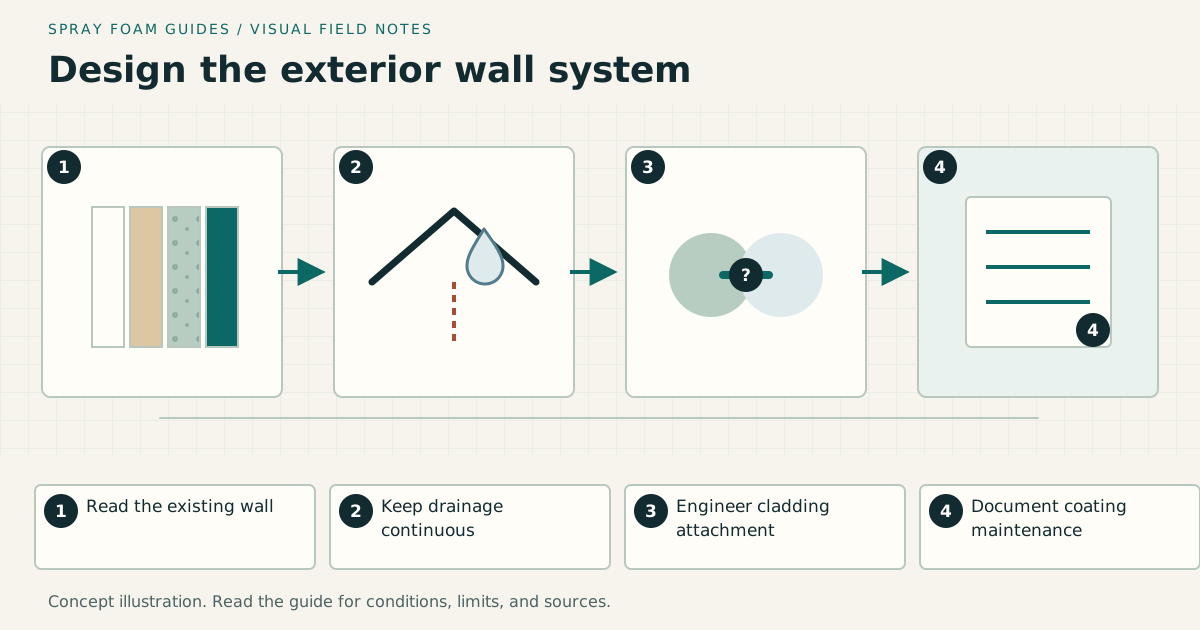
Begin with the existing wall and rain-control strategy. Specify compatible foam, weather and protective layers, attachment, openings, base and roof transitions, fire evidence, and maintenance before any exterior application.
This answer changes when…
- Existing cladding, sheathing, structure, water damage, and control layers
- Drainage plane, flashing, windows, doors, roof-wall, base, and penetration transitions
- Foam, primer, membrane, coating, sealant, and substrate compatibility
- Cladding loads, fastener path, furring, movement, and structural design
- Fire exposure, ultraviolet protection, impact, insects, inspection, and repair
Dotted terms have plain-language definitions. Browse the glossary ↗
This is a recladding project
Exterior spray foam is not simply an interior cavity product moved outdoors. Removing or covering cladding exposes the rain-control system and changes wall thickness, opening geometry, attachments, fire exposure, and construction sequence. Survey the wall and draw the completed section before choosing material.
PNNL’s continuous air-barrier guidance emphasizes continuity at transitions and penetrations. Whether the spray-applied layer performs that role depends on the exact material, thickness, joints, substrate, and connections. Do not assign it water, vapor, structural, or fire functions without separate evidence.
Read the existing wall from outside to inside
Record cladding, cavity or drainage space, water-resistive layer, sheathing, framing, cavity insulation, interior vapor control, and finish. Open representative locations at windows, base, roof or soffit, penetrations, and known leaks. Repair rotten or damaged components before covering them.
| Interface | Design question | Acceptance record |
|---|---|---|
| Window and door head | How does flashing drain over the new outer layers? | Section and sequence photographs |
| Jamb and sill | How are pan, end dams, drainage, and interior air seal preserved? | Opening-specific detail |
| Wall base | Where do water, insects, foam protection, and cladding terminate? | Grade and foundation transition |
| Roof-wall or soffit | Which layer continues through the geometry? | Enlarged transition drawing |
| Penetration | How are sleeve, flashing, movement, and service handled? | Trade-approved detail |
| Cladding attachment | What carries dead, wind, and impact loads? | Structural fastening design |
Water must drain on a named plane
State which material is the water-resistive barrier and how it is lapped or connected. A foam layer can have low water absorption or documented resistance and still require complete flashing and drainage details. Coatings also vary: some are protective finishes, some are part of tested systems, and none should be assigned universal waterproofing from appearance.
Plan construction exposure. If foam or a membrane can be damaged by sunlight, wind, trades, or precipitation, specify protection time and repair. The wall must drain during and after the project.
Attachment belongs to the structure
Cladding, furring, clips, fasteners, and accessories need a structural load path through or around the insulation to suitable framing or substrate. Record fastener type, spacing, embedment, corrosion resistance, compression control, and tolerances. Foam adhesion is not a substitute for a designed cladding attachment unless the complete accepted system specifically makes it one.
Account for differential movement at long walls, floor lines, panel joints, windows, and material transitions. Do not use rigid spray material to lock a joint that must move.
Coordinate vapor and drying
Exterior insulation can warm sheathing and improve some moisture conditions, but the result depends on climate, thickness, existing interior layers, indoor humidity, and rain control. Review the whole wall. Avoid creating a low-permeance layer on each side of moisture-sensitive material without a justified drying and construction-moisture plan.
Fire, exposure, and maintenance are system properties
Obtain the applicable evaluation, tested assembly, and jurisdiction decision for the exact foam, coating, cladding, wall height, openings, and exposure. Surface-burning data alone does not establish every exterior-wall fire requirement. Protect foam at grade, openings, roof lines, and any temporary exposure.
Coatings require compatible preparation, application rate, thickness verification, weather conditions, curing, and maintenance. Define who inspects sealants and coating damage and how repairs will match the original system.
Release sequence
- Survey the wall and investigate representative concealed conditions.
- Repair bulk-water entry and damaged structure or sheathing.
- Draw control layers and every major transition.
- Engineer cladding attachment and movement details.
- Confirm component compatibility, fire evidence, and local acceptance.
- Build and inspect a representative opening or wall mockup.
- Apply by elevation with weather and substrate records.
- Inspect continuity and repairs before cladding conceals the work.
- Deliver as-built details, product records, and maintenance plan.
Stop if the existing wall cannot be identified, leaks remain active, the attachment path is missing, openings lack drainage details, the foam-coating combination is undocumented, or required fire and exposure evidence does not match the project. A successful exterior wall remains understandable and repairable after the scaffolding leaves.
Research & references
Sources used for this guide
- Continuous Air Barrier in Exterior WallsDOE Building America Solution Center · government guidance · United States; air-control continuity and transition concepts, not a prescribed exterior wall stack · accessed 2026-09-09
- Continuous Rigid Insulation SheathingU.S. Department of Energy / Building America Solution Center · government guidance · United States; assembly guidance · accessed 2026-09-06
- Building Enclosure: Air Barriers vs Vapor BarriersDOE Building Science Education · government guidance · United States; educational control-layer concepts · accessed 2026-09-05
- Technical DocumentsSpray Polyurethane Foam Alliance · official standard portal · United States industry guidance index; confirms distinct technical scopes, while full document access, exact system evidence, code acceptance, and site design remain separate · accessed 2026-09-09
- ICC Digital CodesInternational Code Council · official standard portal · Model codes; local adoption varies · accessed 2026-09-05
A citation supports a specific statement, not every possible assembly or local code interpretation.